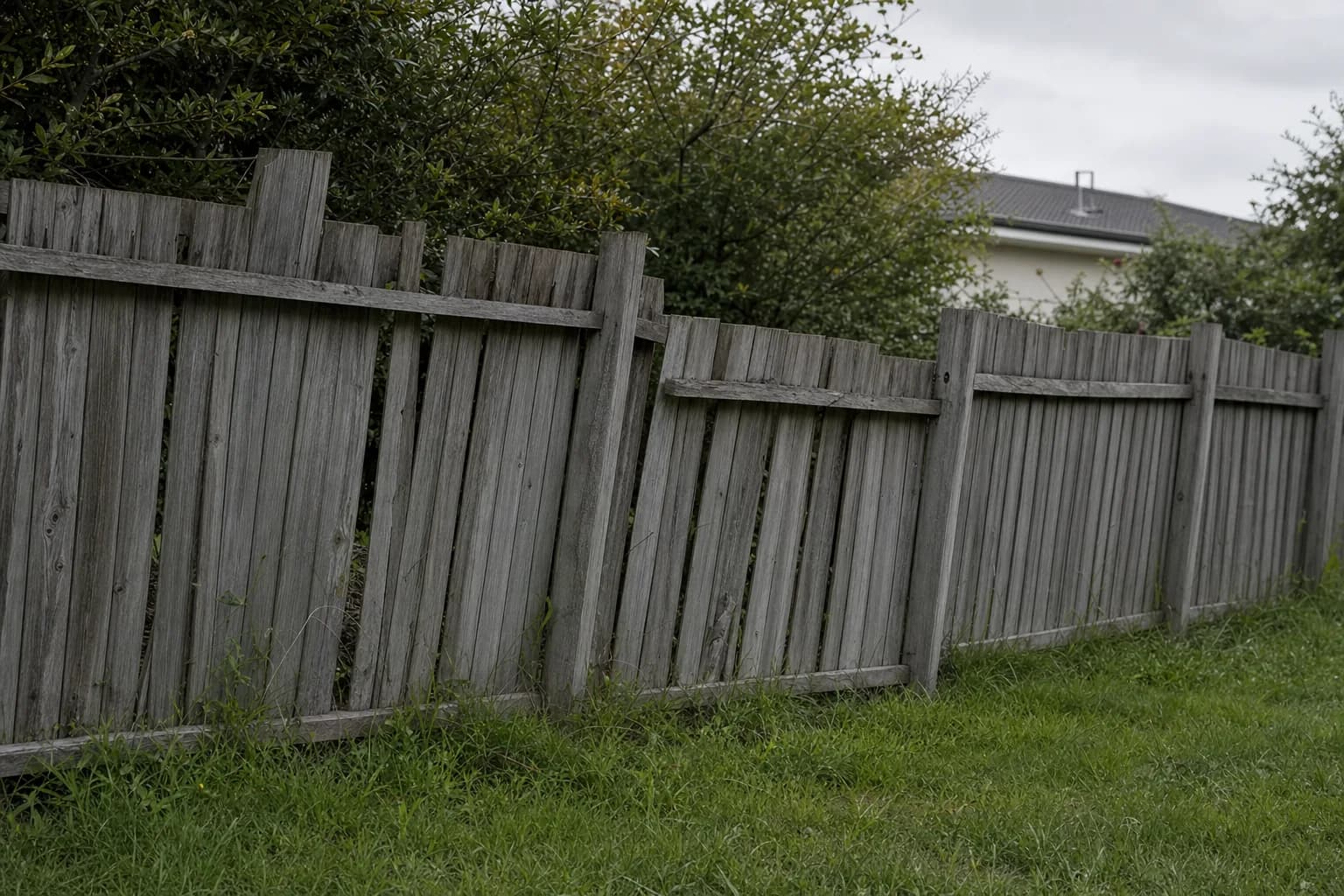
A fence that leans rarely leans because of the fence. The palings or sheets you can see are usually still sound. What has moved is the part nobody looked at, and it is in the ground.
That is worth knowing before you get a quote, because it changes what you should be asking about. Here is what actually pulls a post out of line in Launceston, why it happens, and how you tell a repair from a replacement.
Almost Every Lean Starts Below the Ground
A fence post is a lever. Wind, a neighbour's shrub growing into the line, a kid swinging on the rails, all of that load arrives at the top and pivots against the soil at the bottom. The soil either holds it or it does not.
So whether a fence stays straight comes down to how well the bottom of the post is anchored. Everything above ground is just the face the load arrives on.
The parts that fail first
The parts that fail first are almost always underground. A post set too shallow, or backfilled with dirt instead of concrete, will lean within a few winters no matter how good the panels above it look.
Post Depth, and What Goes Back in the Hole
Depth does two jobs. It drops the pivot point lower, so there is more ground above it resisting the load, and it reaches past the top layer of soil that dries out and cracks open every summer. A shallow post has neither of those working for it.
We do not publish a depth figure, because the honest answer changes with the height of the fence, the soil and how exposed the block is. What we will say is that depth gets set to the job at the measure, not to whatever the borer happened to reach.
Backfill is the other half of the hole. Soil tipped back in and stamped down feels solid on the day, but it is still loose ground that water washes through and frost lifts. Concrete sets into one mass that grips the post and spreads its load into the ground around it.
Ground That Moves Under the Post
Plenty of Launceston sits on heavy clay, and clay does not sit still. It takes up water through a wet winter and swells, then gives that water back over summer and shrinks away. The ground holding your posts is not the same size in August as it is in February.
One cycle does almost nothing. Ten of them rock a shallow post loose the way you would work a tent peg out, a fraction at a time, always further in the direction the load is already pushing. That is why a fence can look fine for years and then go over in one winter.
A footing set deep enough to reach past the worst of that movement, in concrete rather than backfilled dirt, has much less to fight. It is not that the clay stops moving. It is that there is nothing loose left for it to move.
And Then There Are Tree Roots
On established blocks around Trevallyn, Newstead and East Launceston the fence often went in long before the garden filled out. A root thickening against a footing does not push gently. It lifts and tilts, and given time it wins.
Roots also pull moisture out of the soil on their side of the line, which makes the shrink half of the clay cycle worse right where the post is. If a mature tree sits close to the boundary, we would rather set the posts around it than pretend it is not there.
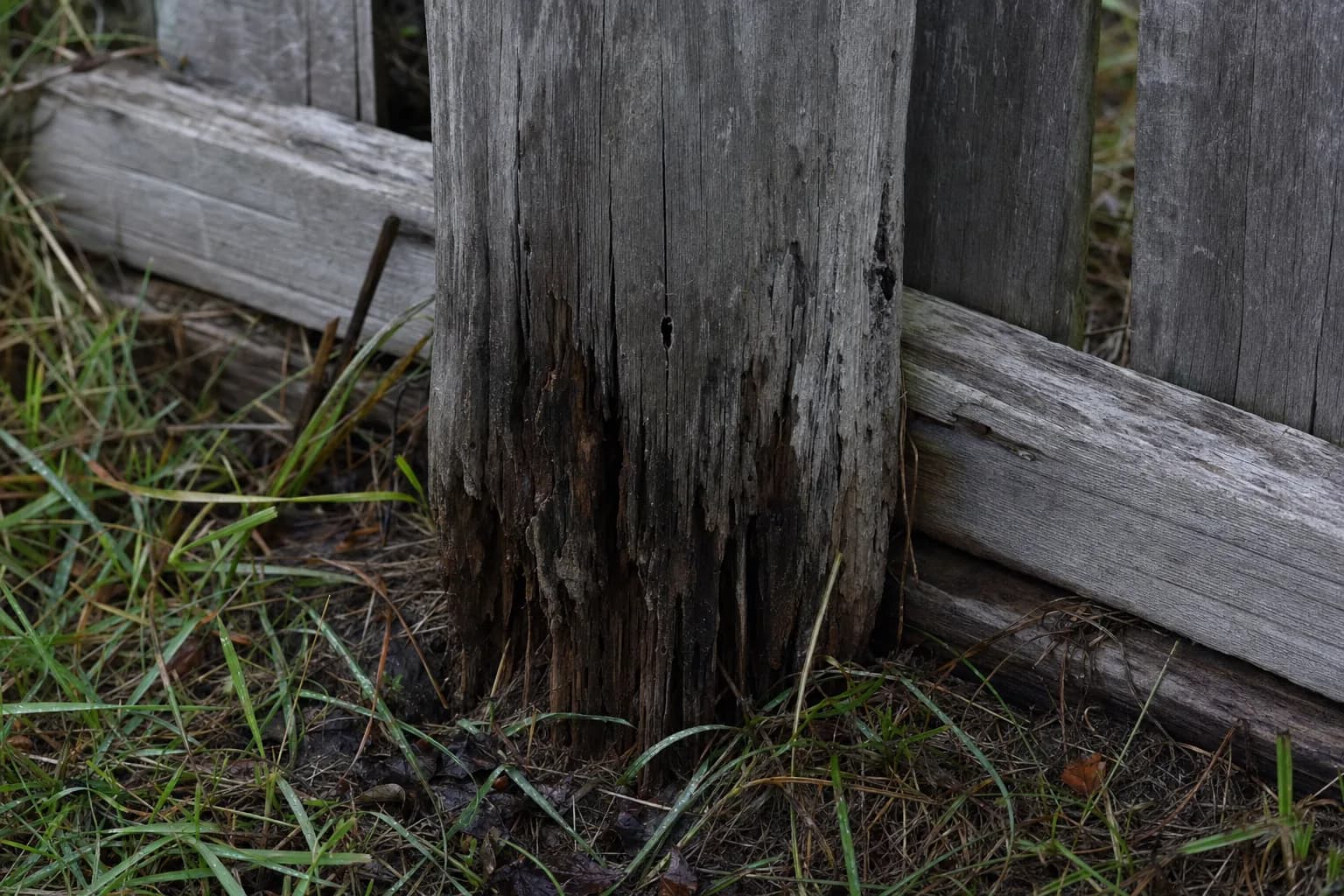
Water Sitting at Ground Level Is Where Rot Starts
Timber does not rot evenly. It goes at the line where wet ground meets air, because that narrow band stays damp and still gets oxygen, which is exactly what rot wants. Dig out a tired paling fence and you will find the posts sound below, sound above, and gone at the soil.
That is why keeping timber clear of wet ground matters more than people expect. Palings sitting down in the dirt wick water straight up. A footing that holds a puddle keeps that band wet all winter.
So we concrete every post, keep the palings up clear of the soil, and make sure water can drain away from the footing rather than sit against it. Small decisions on the day, and most of the difference in ten years.
A Solid Fence Is a Sail
A solid full height fence has no gaps, which is the whole point of it and also its one structural weakness. Air cannot pass through, so the wind pushes on the entire face, and every bit of that push ends up in the posts.
On a sheltered inner block that is rarely the thing that beats a fence. On an open one, up on a rise or facing the Tamar Valley westerlies, it is a real load the footings carry on every windy day for decades.
- A solid infill, with no gaps for air to pass through
- Extra height, which adds face area and lengthens the lever
- An open, elevated block with nothing upwind of it
- A long straight run with no corner or return to stiffen it
- A solid gate leaf, which catches wind and hangs off one post
Long Runs, Corners and Gate Posts
A long straight run has nothing holding it steady but its own posts. Corners and returns brace a fence naturally, because the two directions hold each other, which is why the middle of a long flat boundary is usually the first section to wander out of line.
That is what bracing is for. On long runs, and on rural post and wire, the load has to be carried into the ground at the ends and corners rather than shared thinly along a line of light posts.
Gate posts are their own problem, and they are what we get called out to most. A gate post carries a load no other post does, because the weight of the leaf hangs off one side of it and then swings, so the pull is off centre and it never lets up.
Why gate posts get built differently
We set gate posts deeper and heavier than fence posts, brace the frame diagonally so it cannot pull itself into a parallelogram, and drain water away from the footing. Almost every sagging gate we are called to has skipped one of those three.
Repair, or Replace the Run?
This is the part worth being straight about. If a couple of posts have moved and the rest of the run is sound, resetting those posts and pulling the line back true is fair value, and we will do exactly that.
If the posts have gone at ground level it is a different conversation. Splicing new palings onto tired rails and finished posts buys a season or two, then you pay again, because the proper job still has to happen afterwards.
Original posts on the older post-war blocks are usually finished at the base even where the palings still look respectable. In that case replacing the run is generally better value than repairing it.
How we will put it to you
We walk the line with you and say which one it is. If a repair will hold, we price the repair. If it will not, we say so plainly instead of selling you a patch that fails next winter.
What You Can Check Yourself
None of this needs tools or a ladder. A slow walk along your own boundary on a dry day tells you most of what a fencer would look for.
- Push firmly on each post at chest height and feel whether the base moves in the ground
- Sight along the top of the fence from one end, because a lean shows as a curve long before it is obvious side on
- Press a screwdriver into the timber right at ground level, and if it sinks in soft, that post has gone
- Look for soil, mulch or a garden bed built up against the palings
- Note where water sits after rain, especially around the footings
- Open and shut every gate and see whether it drags or has dropped on the latch side
The one we cannot help with
We build fences. We do not engineer, repair or certify retaining walls, so if your fence is leaning because the wall underneath it is moving, that is another trade and the wall has to be sorted first.
Want a real number for your block?
We walk the boundary, measure it properly, and send an itemised quote in writing within 48 hours.