
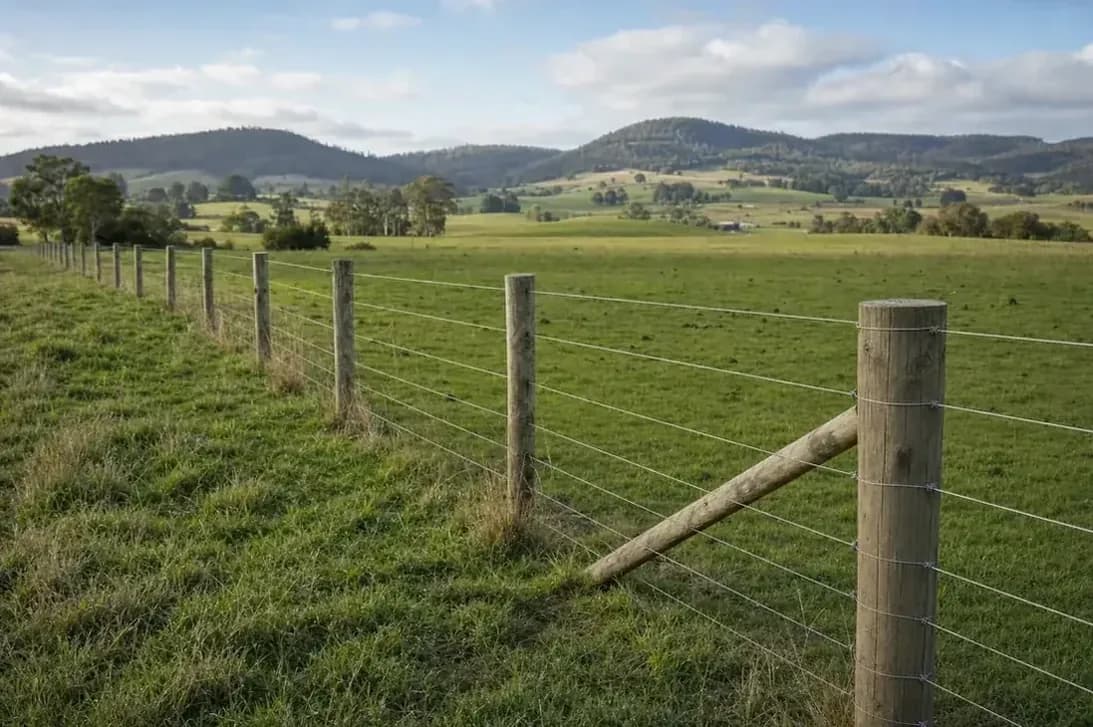
Rural & Agricultural Fencing
Rural & Agricultural Fencing in Launceston
We build post and wire, ringlock, electric and post and rail fencing on acreage and working farms across the Tamar Valley. Boundary runs, internal subdivision, laneways and gates, set out properly and strained hard.
6
Rural fence types built
5-8
Wire configurations run
48hr
Written quote
Zero
Subbies on your job
How Rural Fencing Works
What Actually Makes a Rural Fence Last
A rural fence stands or falls on its strainer assemblies and the tension held between them, not on how it looks from the road. Get those two right and the run stays tight for decades under stock pressure.
Every wire in a rural fence pulls back against the assemblies at each end, so an undersized or badly braced strainer lets the whole run go slack inside a season. We set strainers deep, brace them so the load carries into the ground, then strain the wire evenly. Intermediate posts only hold the spacing.
The stock you run decides the fence you need. Cattle push and rub, so they want fewer, heavier wires and solid assemblies, while sheep get through gaps and want ringlock or tighter spacing near the ground. Horses are different again, because plain high tensile wire can cut, so we talk through mesh or rail.
Ground across the Tamar Valley is rarely uniform down one boundary. You can start in soft river flat, run into rock on a rise and finish in wet ground that will not hold a post, so post type, hole depth and footing change along the same fence. We work that out on the walk.
Boundary fencing and internal fencing are two different jobs. A boundary run has to last, has to be agreed with your neighbour and usually gets the heaviest spec, because moving it later is painful. Internal fences for paddock subdivision, laneways and rotational grazing can be lighter, and electric is often the sensible answer there.
How We Build a Rural Run
Three things that decide whether a paddock fence is still tight in ten years.
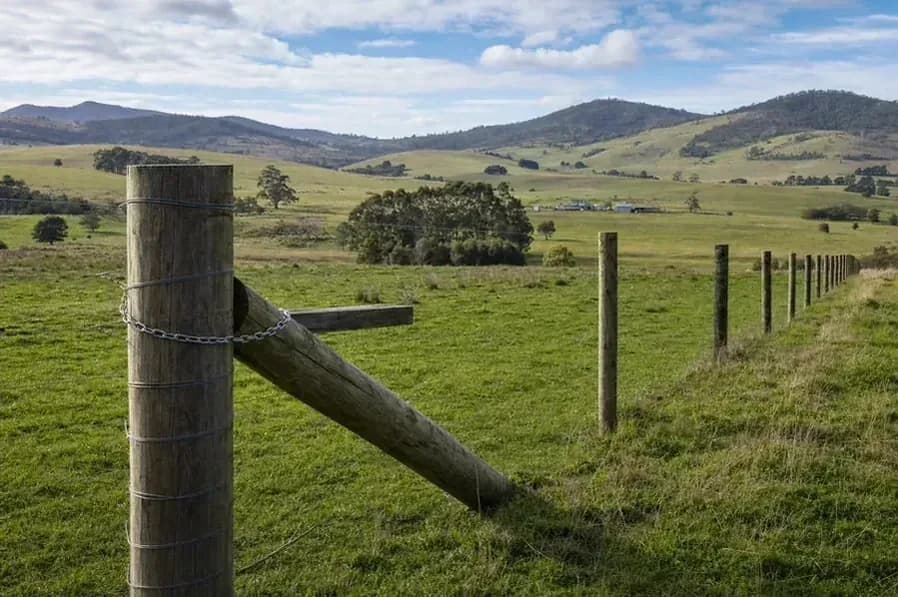
Strainers & Tension
Assemblies Set to Carry the Load
Strainer posts go in deep, braced with a stay or a box assembly so the pull is transferred into the ground. Wire is then strained evenly and fitted so you can pull it back up years later without cutting anything out.
- Deep-set, braced strainer posts
- Even tension across every wire
- Re-tensionable strainers fitted
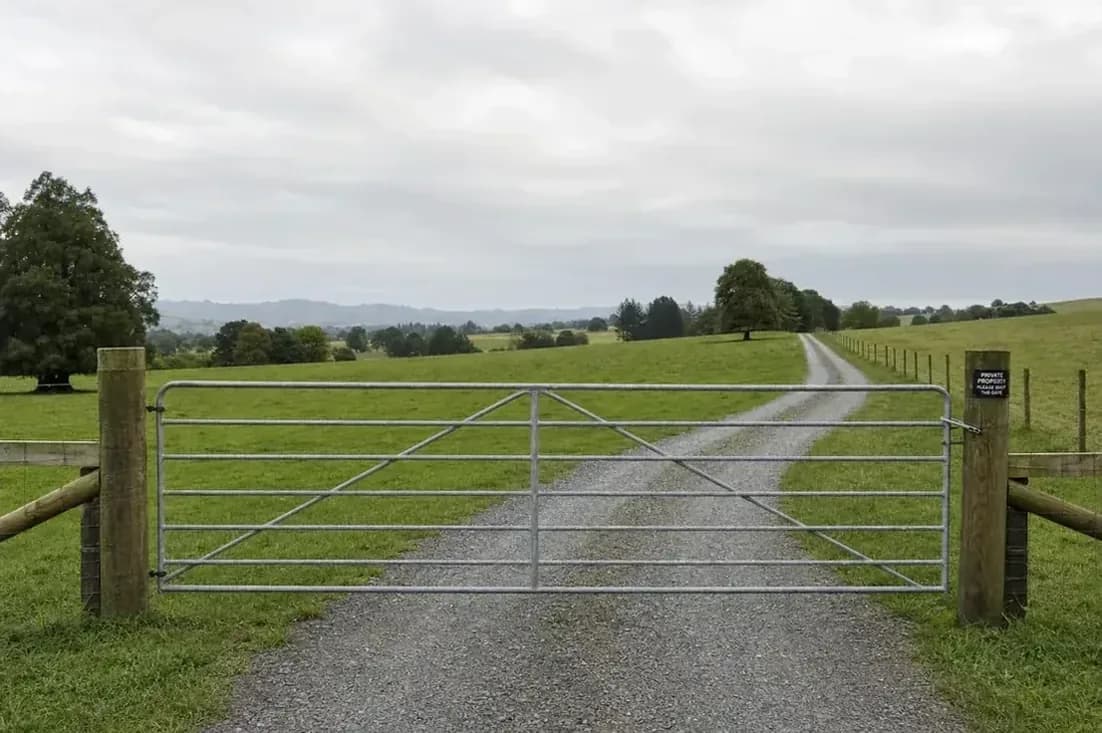
Gates & Access
Gateways in the Right Places
Gates are the part of a fence you use every day, so they get hung on their own strained assembly rather than off the end of a run. We size them for the machinery you actually move, not just for a ute.
- Hung off dedicated posts
- Sized for tractors and floats
- Placed on stock flow lines
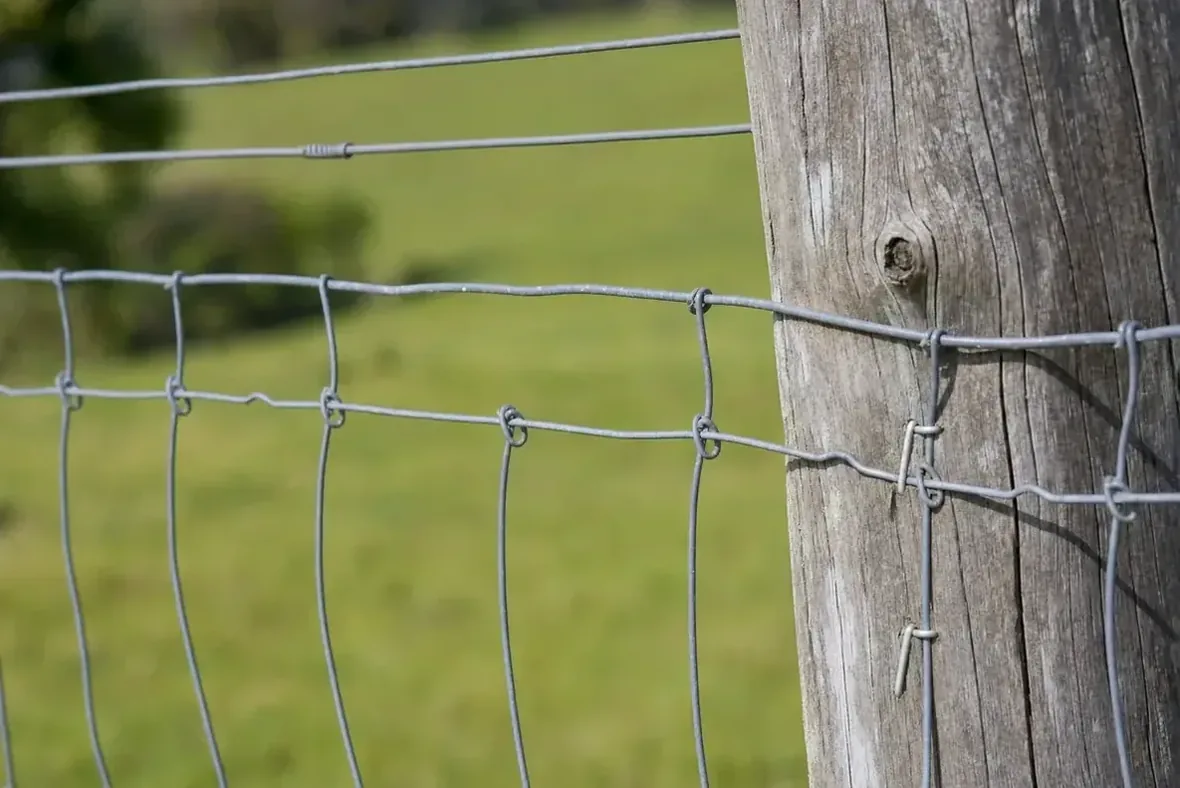
Stock Mesh
Fencing That Suits the Stock
Ringlock and hinge joint mesh holds sheep, lambs and smaller stock that walk straight through plain wire. Graduated spacings sit tighter at the bottom, and the hinge joint gives when an animal leans on it instead of staying bent.
- Holds sheep and lambs
- Tighter spacing near ground
- Springs back after pressure
Compare
Post & Wire vs Ringlock vs Post & Rail
Three fences we build most on rural blocks, and the honest trade-off between them. Cost per metre goes up as you move to the right, and so does what the fence will hold.
| Post & Wire | Ringlock Stock Mesh | Post & Rail | |
|---|---|---|---|
| Cost per metre | Lowest | Middle | Highest by a long way |
| Best for | Cattle and boundaries | Sheep and small stock | Horses and frontages |
| Holds small stock | Poorly on its own | Yes, that is the point | No, rails leave gaps |
| Long runs | Ideal | Workable | Rarely worth it |
| Repairs | Simple, re-tension | Patch or replace a panel | Replace the rail |
| Look | Plain and functional | Plain and functional | Best looking fence built |
Fence Types
Rural Fence Types We Build
Most blocks end up with a mix rather than one fence everywhere. Here is what each type is good for, so you can tell us what you are running and where.
Plain wire post and wire Most common
The standard working fence for cattle and general boundary runs, usually five to eight strained wires on timber or steel posts. It is the cheapest way to cover long distances and the easiest to maintain and re-tension.
Ringlock or hinge joint stock mesh
Fabricated mesh with graduated spacings that hold sheep, lambs and smaller stock where plain wire will not. It costs more per metre than plain wire but saves you chasing animals through the bottom of a fence.
Electric fencing
Hot wires on insulators, either as a full internal fence or as an outrigger on an existing run to stop rubbing and pushing. It is quick to put up, cheap per metre and easy to move, which suits rotational grazing.
Post and rail
Timber rails morticed or fixed into heavy posts, used on horse paddocks, house yards and frontages where sighting matters. It is the best looking and the safest for horses, and it is the dearest per metre of anything we build.
Deer and high game fencing
Tall fabricated mesh on long posts, strained hard, for deer and other stock that will jump a normal fence line. Heights and post lengths are set to what you are containing, so this one always gets worked out on site.
Farm gates and access points
Gateways, laneway entries and cattle races hung off their own braced assemblies so they stay square. We work out the widths with you based on the machinery and the way stock move through the block.
Cost
What Affects the Price of a Rural Fence
Rural fencing is quoted per metre, but the rate swings a long way depending on the ground and the spec. We walk the line before we price it, because two fences of the same length on the same road can cost very differently. These are the things that move the number.
Total length
Long runs work out cheaper per metre because setup, travel and machinery are spread further. A few hundred metres of repair carries more cost per metre than a kilometre of new boundary.
Fence type and wire configuration
Plain wire, ringlock, electric and post and rail sit at very different rates. The number of wires and the spacings you want change the material cost on every single metre.
Ground conditions and rock
Soft flat ground drives posts quickly, rock does not. Rocky rises, hard shale and wet ground that will not hold a post all slow the job and change how the posts are set.
Clearing the fence line
Old wire, blackberry, scrub and fallen timber have to come off the line before anything goes in. If you can clear it yourself beforehand it comes straight off the quote.
Strainer and corner assemblies
Every corner, gateway, dip and rise needs its own braced assembly, and those are the most expensive metres in the fence. A straight boundary needs far fewer of them than a broken, hilly one.
Gates and access points
Gate widths, hanging posts and laneway entries are priced individually. Tell us the machinery you move through and we will size them once rather than twice.
Rural boundary fences between two properties are generally a shared cost in Tasmania, and the usual starting point is agreeing on the fence before work begins. We give you a written, itemised quote you can hand straight to your neighbour so both parties can agree on the spec and the split.
How It Works
From Quote to Finished Fence
Four steps and no surprises. Same crew from the first walk of the fence line through to the last gate hung.
We walk the fence line
We walk the whole run with you, not just the ends. We check the ground, mark the rock and wet patches, work out where corners, strainers and gates land, and talk through the stock you are running.
Written quote in 48 hours
You get an itemised quote in writing with the rate per metre, the assemblies, the gates and any clearing listed separately. No deposit pressure and no vague number thrown out on the day.
Clear, set and strain
We clear the line, set the strainer assemblies first, then run the posts and strain the wire off them. Gates go in last so they sit square against a finished fence.
Final walk and tidy up
We walk the finished run with you, check the tension, hang and swing every gate, and take the old wire and rubbish away with us.
The Spec
What's in a Prime Fencing Rural Run
The base spec we build to on rural work. Everything moves to suit your stock, your ground and the length of the run.
- Posts
- Treated timber or steel, 4m to 6m spacing
- Strainer assemblies
- Braced or box, at ends, corners and gates
- Wire
- High tensile plain, 5 to 8 wires
- Stock mesh
- Ringlock or hinge joint, graduated spacing
- Gates
- Farm gates hung on dedicated posts
- Footings
- Driven or concreted to suit the ground
FAQs
Rural & Agricultural Fencing Questions, Answered
It depends on the fence type, the wire configuration and the ground, so we quote on site rather than guessing over the phone. Rock, wet ground, clearing and the number of corner assemblies can move the rate a long way on the same length of fence, and you get an itemised written price within 48 hours of the walk.
A properly strained fence on sound assemblies will run for decades with occasional re-tensioning. What kills a rural fence early is undersized strainers, shallow footings and wire that was never strained hard enough, not the wire itself wearing out.
Cattle do well behind heavier plain wire with solid assemblies, because they push and rub rather than squeeze through. Sheep and lambs want ringlock or hinge joint mesh with tighter spacing near the ground. Horses are safer behind mesh, rail or wire with a clear sighter, because plain high tensile wire can cause injury if a horse goes through it.
Yes, both as standalone internal fencing and as an outrigger wire on an existing run to stop stock rubbing and leaning. It is quick to put up and cheap per metre, which makes it a good fit for paddock subdivision and rotational grazing.
Yes, and it is itemised separately on the quote. Old wire, scrub, blackberry and fallen timber all have to come off the line before posts go in, so if you would rather clear it yourself beforehand we take it off the price.
Yes. Rock changes how posts are set and slows the job, so we mark it on the walk and price it in rather than hitting you with a variation later. Wet ground that will not hold a post gets a different footing or post type through that section.
The cost of a boundary fence between two rural properties in Tasmania is generally shared between the two owners, and the usual first step is agreeing on the fence in writing. We give you an itemised quote you can hand to your neighbour, and we will walk the line with both parties.
Yes. We re-strain slack runs, replace failed strainer assemblies, patch out damaged sections and pull out and replace old fence lines completely. On an old run we will tell you honestly whether it is worth repairing or whether you are better off replacing it.
It comes down to the ground, the clearing and the number of assemblies rather than the metres alone. Straight, clear country moves quickly, while rock, scrub and a broken boundary with lots of corners takes considerably longer, and we give you a realistic timeframe with the quote.
Other Fencing We Build
We install rural & agricultural fencing across greater Launceston, including Riverside, Prospect, Kings Meadows, Newnham, Mowbray and the wider Tamar Valley.
Ready to Fence Your Block?
Book a free on-site quote and we'll give you a real number in writing within 48 hours. No deposit, no obligation.