
Timber & Paling Fencing
Timber & Paling Fencing in Launceston
Timber and paling fencing is the classic Launceston boundary fence. Built with graded timber, concreted posts and proper fixings, it gives you a private backyard that ages well through Tamar Valley weather.
1.8m
Standard paling height
H4
In-ground treated posts
48hr
Written quote
Zero
Subbies on your job
Why Timber
The Fence That Still Suits a Launceston Backyard
Nothing makes a backyard feel finished like a straight run of new palings. Timber is warm, private and easy to live with, and it still suits Launceston streets better than anything else.
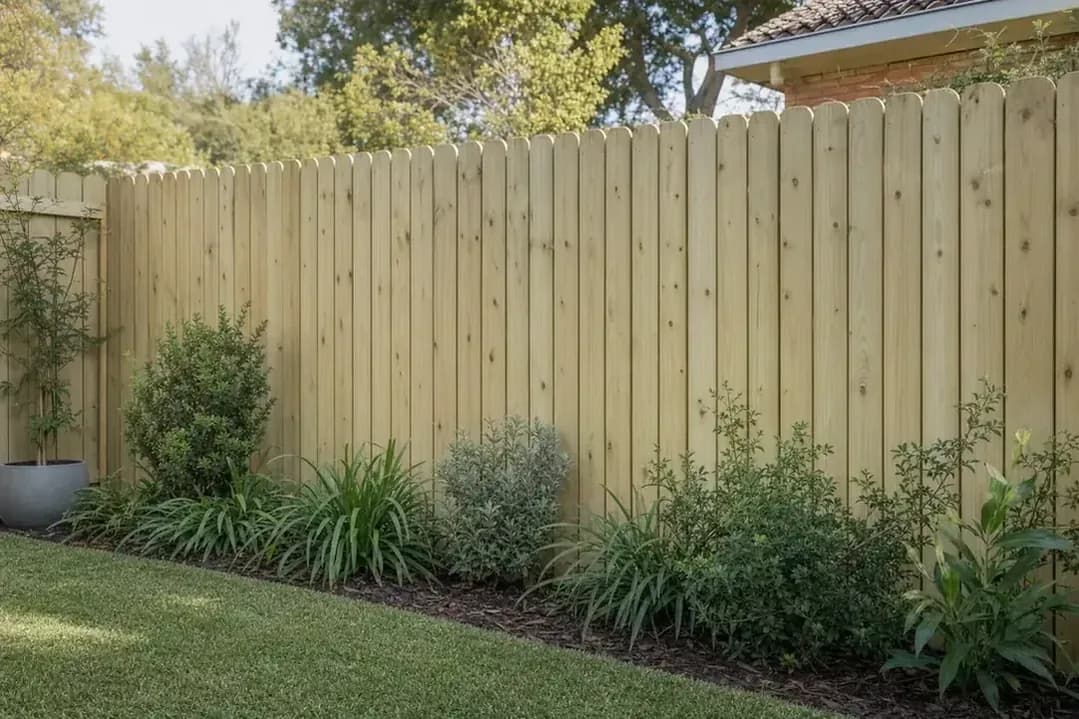
A timber paling fence is the traditional boundary fence, and on a lot of Launceston blocks it is still the right call. Rough sawn palings on solid rails give you a warm, natural line that softens as it weathers. It sits comfortably next to older weatherboard and brick homes in Trevallyn, Newstead and East Launceston.
Timber is a natural product, so it moves with the weather. Tamar Valley winters are damp and cold, summers are dry and windy, and that cycle makes boards shrink, swell and cup. Building for that movement is most of the job, so we set the gaps, the fixings and the post depth to suit the timber.
The parts that fail first are almost always underground. A post that is too shallow, or backfilled with dirt instead of concrete, will lean within a few winters no matter how good the palings above it are. We dig proper holes, concrete every post, and keep the palings clear of the soil.
Timber does ask more of you than steel. Left bare it will silver off to grey, and if you want it to stay honey coloured it needs oil or stain every few years. We will tell you that before you commit, and if the upkeep does not suit your block we will say so and price the alternative instead.
What Makes a Timber Fence Last
Three things decide whether a paling fence still looks straight in ten years or leans in three.
Timber & Fixings
Graded Timber and Posts Set Properly
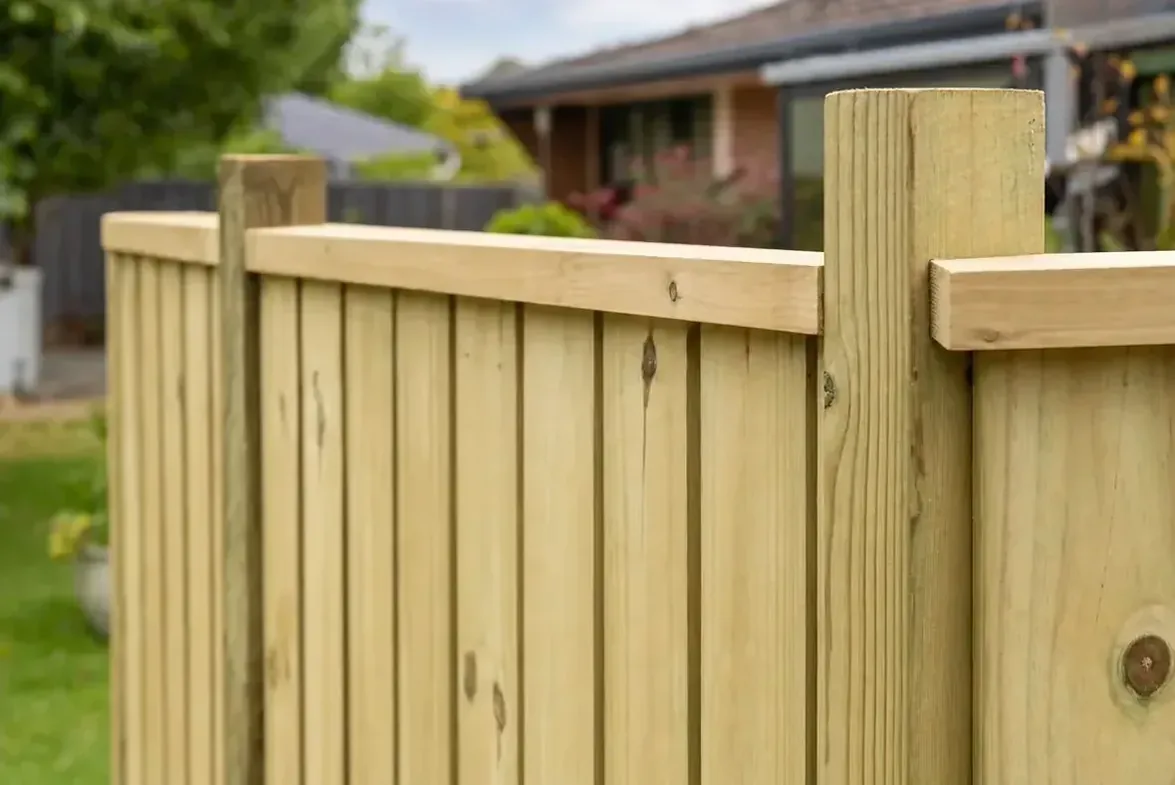
We build with treated pine or hardwood rated for outdoor and in-ground use, not offcuts and seconds. Palings go on with galvanised or stainless fixings, so you do not get black bleed streaks running down the boards after the first wet winter.
- Treated pine or hardwood
- Galvanised or stainless fixings
- Every post concreted to depth
Privacy & Warmth
A Solid, Private Backyard Boundary
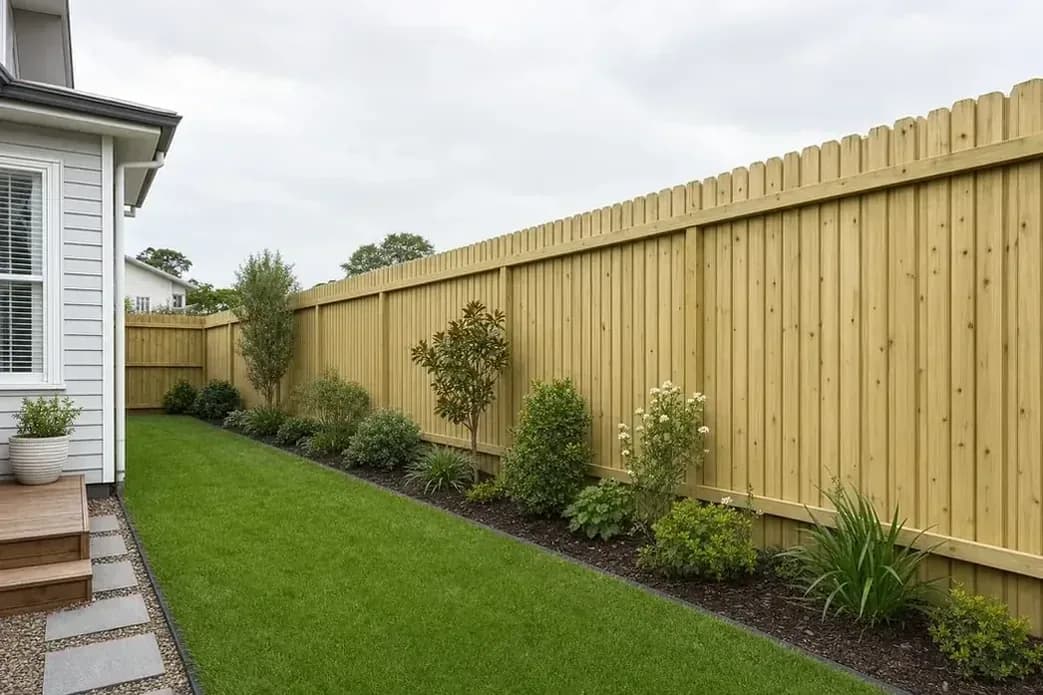
Palings can be lapped so there is no line of sight through the fence, which gives you full privacy without going to a steel panel. It is the fence most people picture when they think of a backyard, and it feels warmer underfoot and overhead than metal does.
- Full privacy when lapped
- Warm, natural finish
- Safe for kids and pets
Hardwood & Features
Hardwood Where It Has to Work Harder
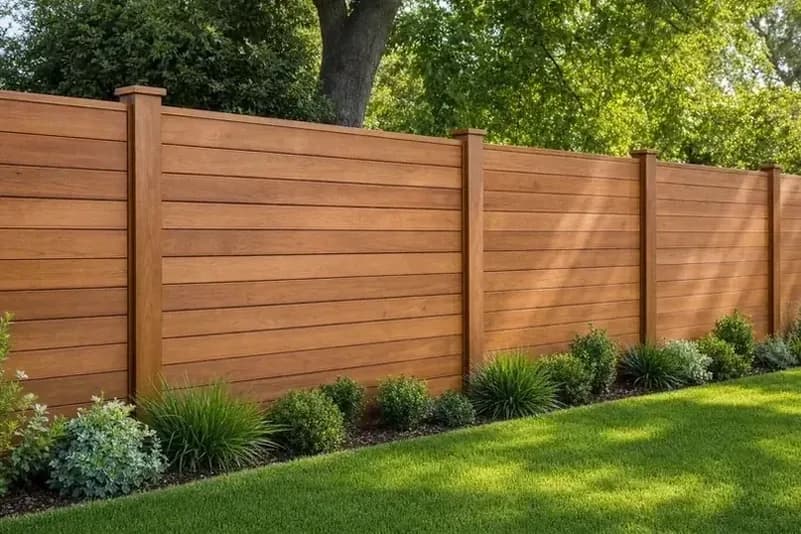
Hardwood posts and rails cost more up front, but they hold a fixing better and take knocks and weather without complaint. They earn their keep on exposed rural boundaries and on front fences where the timber is meant to be the feature, not the background.
- Hardwood posts and rails
- Good for feature and front fences
- Handles exposed, windy blocks
Compare
Timber vs Colorbond vs Aluminium Slat
Timber is not the right answer on every block. Here is an honest look at how it compares with the other two boundary fences we build most, including where it loses.
| Timber | Colorbond | Aluminium Slat | |
|---|---|---|---|
| Maintenance | Oil or stain every few years | Just hose it down | Occasional wash |
| Privacy | Full when lapped | Full, no gaps | Slatted, partial |
| Weather resistance | Good if sealed and looked after | Excellent | Excellent |
| Look | Warm and natural | Clean and modern | Sleek and contemporary |
| Lifespan | Shorter, depends on upkeep | Long | Long |
| Repairs | Swap one paling at a time | Replace a sheet or panel | Order matching parts |
Options
Ways to Build a Timber Fence
Timber is not one fence. These are the choices we walk through at the measure, and each one changes the look, the price or how long it lasts.
Treated pine palings Most popular
Pressure treated pine is the standard paling across Launceston, and it is the best value way to get a full timber boundary. It starts a light honey colour and weathers to soft grey if you leave it bare.
Hardwood palings
Hardwood is heavier, denser and holds its shape better on long or exposed runs. It costs more per metre, so plenty of people use hardwood for the posts and rails and pine for the palings.
Lapped or butted palings
Lapped palings overlap each edge so there is no gap to see through, even after the timber dries and shrinks. Butted palings sit edge to edge for a flatter, more modern face, but they will open up slightly as the boards move.
Capped or exposed posts
A capping rail along the top hides the post tops and paling ends, and gives the fence one clean line from end to end. Leaving the posts exposed is the traditional look, costs less, and is easier to repair board by board.
Lattice or slat topper
A lattice or horizontal slat topper adds height and light without turning the fence into a wall. It is a common fix where you want more screening from a neighbouring second storey and still want air and light through the top.
Cost
What Affects the Price of a Timber Fence
We quote on site rather than guessing down the phone, because two timber fences of the same length can price very differently. These are the things that move the number, so you can see exactly what you are paying for.
Length of the run
Price is mostly driven by lineal metres. Longer runs usually work out cheaper per metre, because the setup, delivery and set out are spread further.
Fence height
1.5m, 1.8m and 2.1m are the common heights. Going taller means longer posts, deeper holes and an extra rail, so it costs more per metre than the height alone suggests.
Timber choice
Treated pine is the value option and hardwood sits above it. Mixing the two, with hardwood posts and pine palings, is a common middle ground and we will price both ways.
Ground and slope
Rock and heavy clay slow post holes right down. A stepped or raked fence also takes longer to set out and cut than a flat run.
Site access
If we can get a ute and a post hole borer to the line, the job is quicker. Narrow side access, or carrying timber through the house, adds hours to the labour.
Old fence removal, gates and extras
Pulling out the old fence, breaking out footings and taking the rubbish away is its own line on the quote. Gates, capping rails and lattice toppers are listed separately too, so you can add or drop any of them.
Dividing fences between two properties are generally a shared cost in Tasmania. We will give you a written, itemised quote you can hand straight to your neighbour before anything is agreed.
How It Works
From Quote to Finished Fence
Four steps and no surprises. You deal with the same crew from the first measure through to the final walk.
Free on-site measure
We walk your block, measure the run, check levels and boundaries, and talk through timber, heights and paling style.
Written quote in 48 hours
You get a clear, itemised quote in writing. No deposit pressure and no vague on-the-spot numbers.
Supply and install
We concrete the posts, hang the rails and fix every paling to a straight line, stepping or raking the run where the ground falls away.
Final walk and clean-up
We walk the finished fence with you, sort any last details, and leave the site tidy.
The Spec
What's in a Prime Fencing Timber Fence
Every timber fence we install is built to the same spec, whatever the length.
- Standard heights
- 1.5m, 1.8m, 2.1m
- Timber
- Treated pine or hardwood
- Posts
- Set in concrete footings
- Rails
- Two or three, to suit height
- Palings
- Lapped or butted, gal fixed
- Finish
- Left to grey, oiled or stained
FAQs
Timber & Paling Fencing Questions, Answered
It depends on the length, the height, the timber you choose and how easy the line is to get to, so we quote every job on site. You will get a written, itemised price within 48 hours of the measure, with no obligation.
1.5m, 1.8m and 2.1m are the common heights, and 1.8m is what most Launceston backyards end up with. A lattice or slat topper can add extra height and screening where the rules for your block allow it.
That comes down to the timber, the posts and the upkeep, which is why we concrete every post and keep the palings clear of wet ground. A maintained timber fence gives you many good years, though steel will generally outlast it with less work from you.
Only if you want to keep the colour. Left bare, treated pine and hardwood both silver off to grey and keep doing their job, but a coat of oil or stain every few years holds the warm tone and slows down surface checking.
Yes. We either step the fence down in sections or rake the rails to follow the ground, and we will show you both at the measure because they look quite different.
In Tasmania the cost of a dividing fence is generally shared between the two owners, and the usual first step is agreeing on the fence in writing. We will give you an itemised quote you can hand to your neighbour, and we are happy to talk it through with both parties.
Most standard boundary fences at normal heights do not need approval, but front fences, corner blocks and heritage areas can be different. We will flag anything that looks like it needs a check with the City of Launceston at the measure.
Yes. We can pull out the old palings, break out the concrete footings and take the rubbish away, and it is itemised separately so you can leave it off if you would rather handle it yourself.
A paling fence is a boundary fence built for privacy, so the boards sit tight together or lapped with no gap to see through. A picket fence is a front fence with deliberate gaps, built to be looked at rather than to hide anything. They are different jobs, and we quote them separately.
Choose timber if you want the warm, natural look and you do not mind oiling it every few years or replacing the odd paling. Choose steel if you want to fence it once and forget it, and we will quote both so you can compare real numbers on your block.
Not unless it is specifically built to the pool safety standard. A barrier has requirements for height, gaps, gates and what can be climbed, and an ordinary picket or slat fence is not designed around any of them. We will not sign off an existing fence as a barrier just because it surrounds the pool.
Other Fencing We Build
We install timber & paling fencing across greater Launceston, including Riverside, Prospect, Kings Meadows, Newnham, Mowbray and the wider Tamar Valley.
Ready to Fence Your Block?
Book a free on-site quote and we'll give you a real number in writing within 48 hours. No deposit, no obligation.