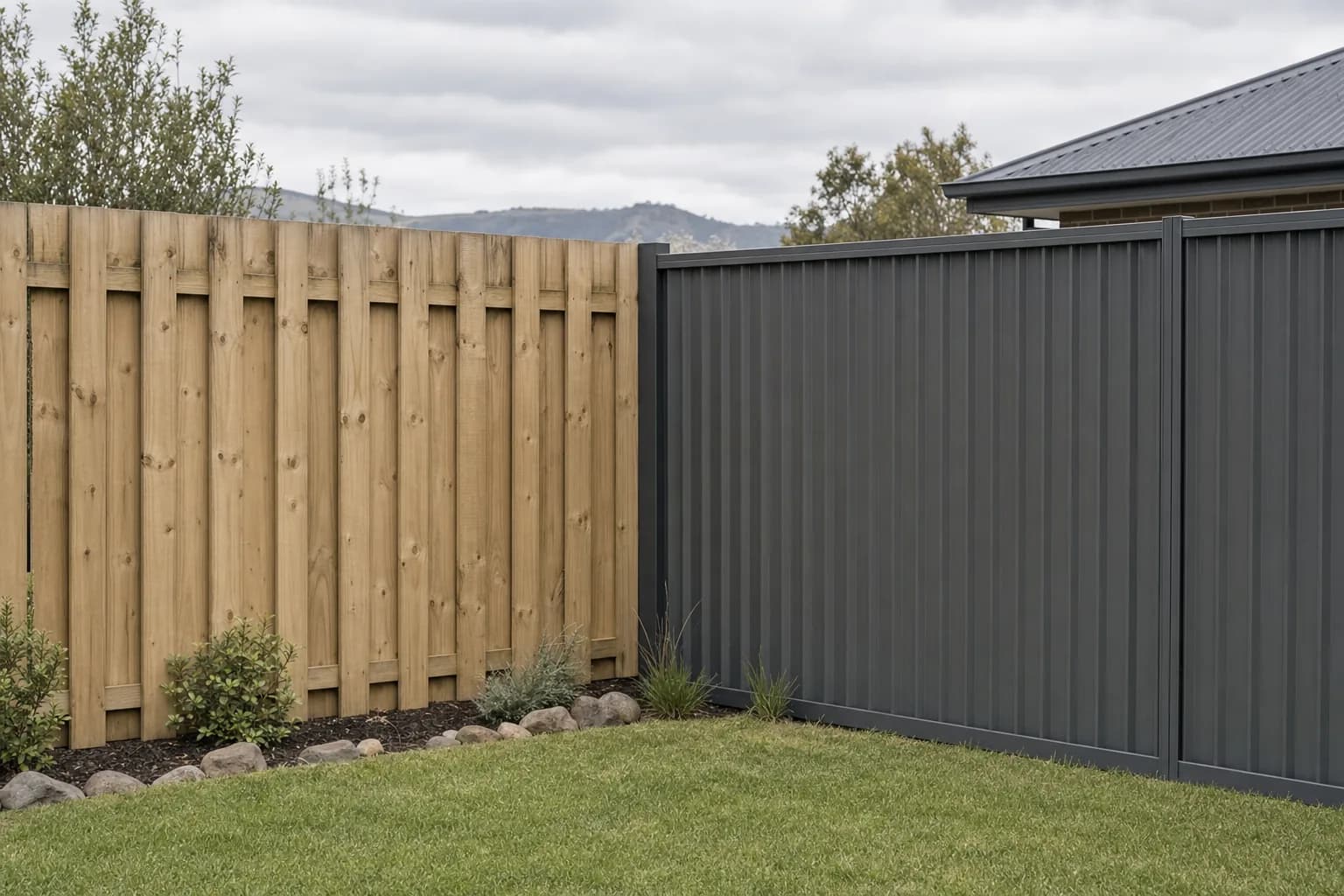
It is the question we get asked at nearly every measure. Steel or timber, and which one is the right call on this block. The honest answer changes street by street, and sometimes it changes between the front boundary and the back one on the same property.
Both are good fences. They fail differently, they age differently, and they ask very different things of you once the crew has packed up. Here is how we actually weigh it up.
Build Cost Is Not the Deciding Factor
Most people arrive expecting a wide gap in price, and there is not one. Steel and timber sit closer together to build than the reputation suggests, and on any given block either can come out ahead depending on the ground, the access and the timber you pick.
So the total rarely settles the argument. The real difference is what each fence asks of the owner over the following twenty years, and that is a much easier question to answer honestly than a price comparison is.
Where the money actually goes
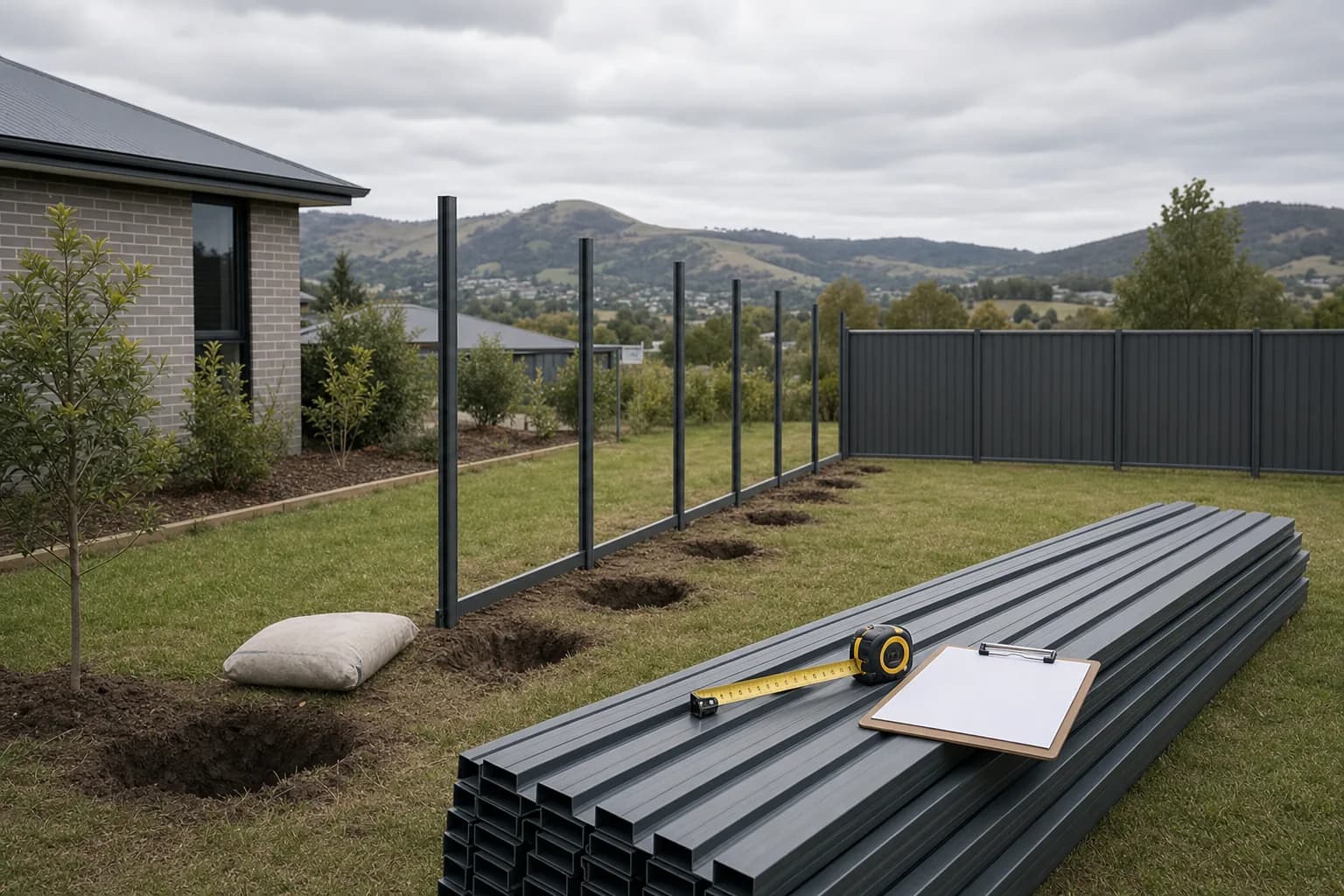
On both fences the underground work is the same job. Post holes, depth and concrete footings do not get cheaper because you chose palings, and they are still the part that decides whether the fence stands straight in ten years.
How Each One Handles Tamar Valley Weather
Launceston puts a fence through a hard cycle. Winters are damp, cold and frosty, summers turn dry and windy, and it is the swing between the two that pulls a boundary apart rather than either extreme on its own.
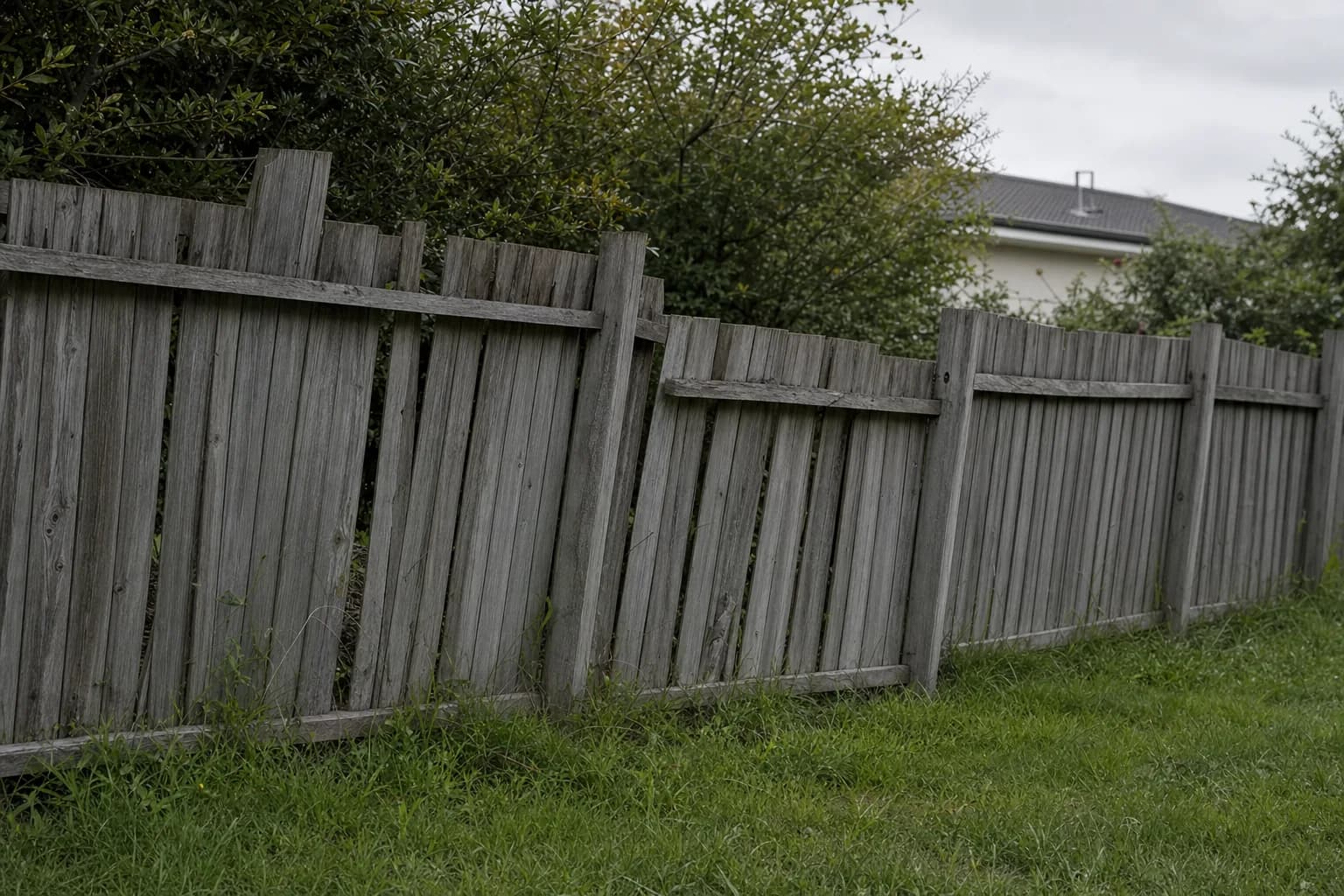
Timber is a natural product, so it drinks that moisture in and gives it back. Boards swell through a wet winter and shrink again over a dry summer, and after enough of those cycles some of them cup, twist or check along the grain.
Steel does not take on water. Colorbond sheets are coated and baked at the factory, so there is nothing for the damp to get into, and the panel that goes up is the shape it keeps.
Wind Is the Other Half of It
Both fences handle wind well when the posts are set properly, and both fail at the posts when they are not. The difference shows up in the fixings. A paling that has worked loose will rattle and eventually lift, where a steel sheet is captured in a rail top and bottom.
Privacy: Lapped Palings Versus a Solid Sheet
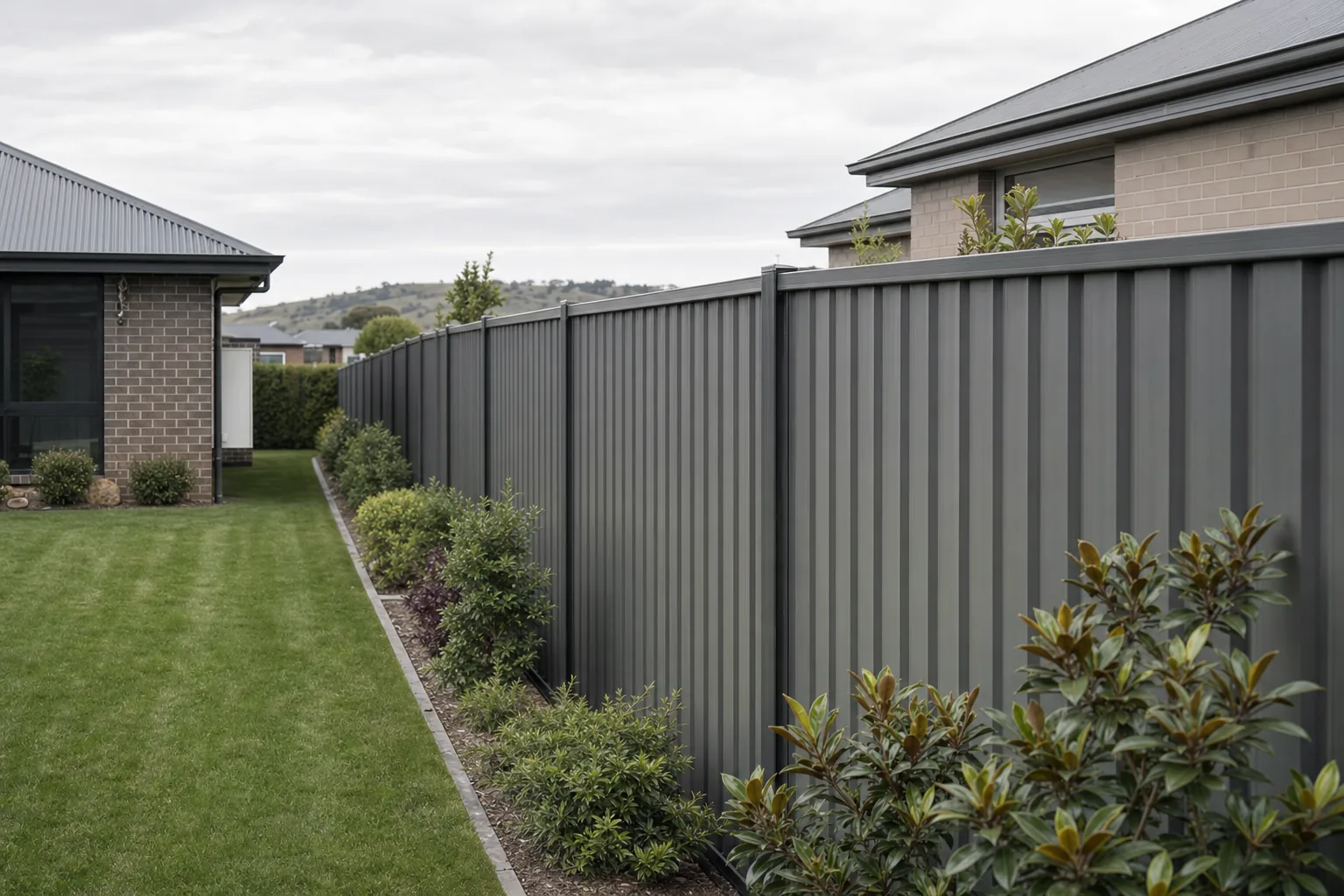
Colorbond wins this one on paper. Interlocking sheets form a single solid face with no gaps at all, and it stays that way for the life of the fence because the steel does not move with the seasons.
Timber gets you to the same place, as long as the palings are lapped. Lapped boards overlap at every edge, so there is no line of sight through the fence even after the timber dries out and shrinks back.
Butted palings are the trap. Sitting edge to edge they look flatter and more modern the day they go up, then open into thin gaps once the boards lose moisture over their first summer.
Neither One Is a Sound Barrier
A solid fence of either kind takes the edge off, and a gap-free run does more than a slatted screen ever will. Do not expect either to fix road noise though, because that takes mass and height well past what a boundary fence is.
Maintenance, Told Straight
This is where the two separate, and it is not close. A Colorbond fence is close to hose it down and forget it, with nothing to paint, oil or seal at any point in its life.
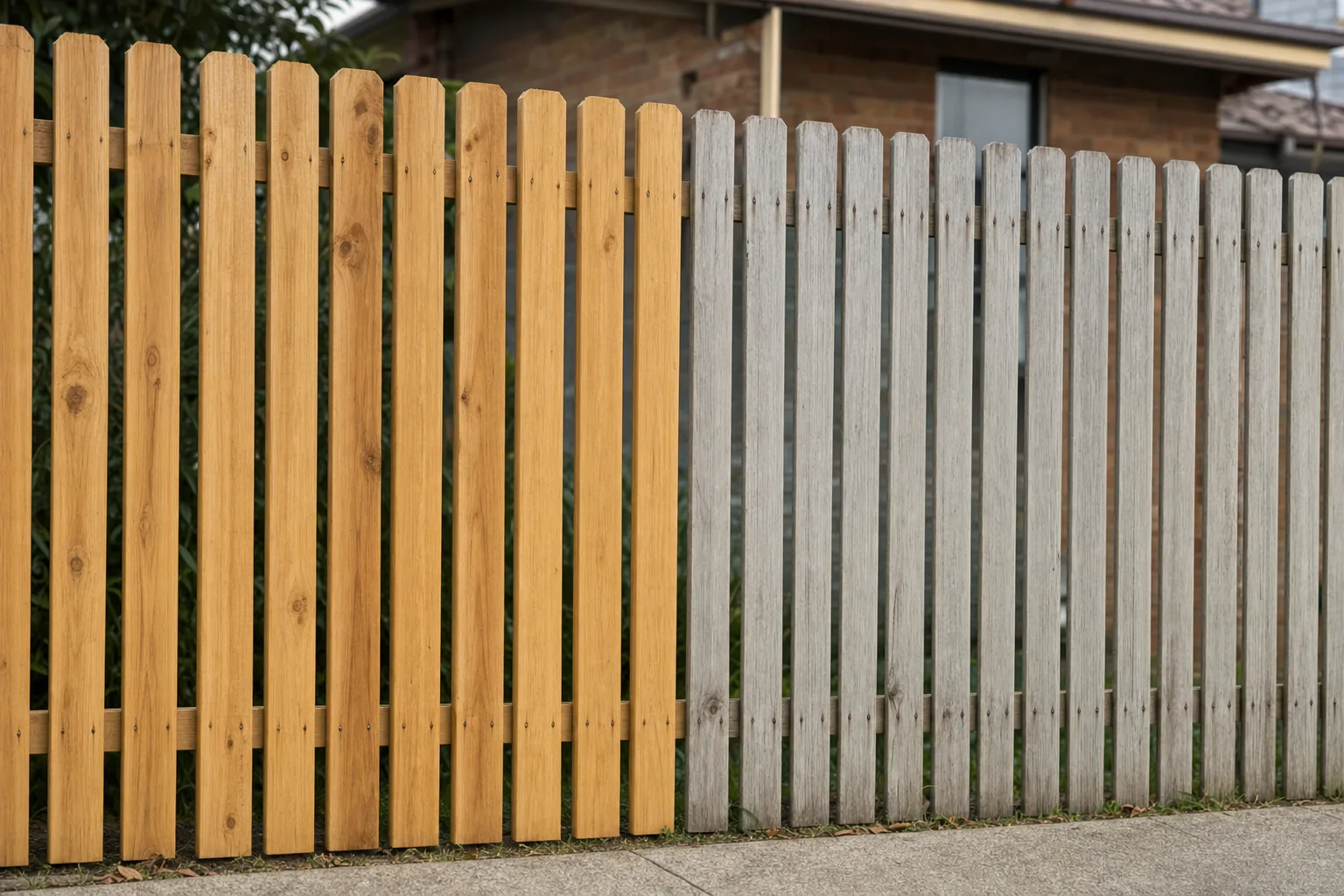
Timber is the opposite. Left bare, treated pine and hardwood both silver off to a soft grey and keep doing their job perfectly well, but if you want that honey colour to stay you are oiling or staining it every few years.
- Colorbond: wash it down when it looks dusty, that is the whole job
- Timber left bare: no work at all, but expect grey within a couple of seasons
- Timber kept warm coloured: oil or stain every few years, ideally both sides
- Timber either way: check the fixings and replace the odd cupped board
- Both: keep soil, mulch and garden beds off the bottom of the fence
We say all of that before anyone signs, because upkeep is the part people forget while they are standing in the yard picking a look. Steel will generally outlast timber with less work from you, and pretending otherwise would be dishonest.
Repairs: One Paling Versus One Sheet
Timber takes this round comfortably. A dropped tree limb, a reversing trailer or one split board is a single paling swapped out, and it is a job you can do yourself with a drill and a trip to the hardware.
Steel is a bigger job for a smaller problem. A dented or bent sheet usually means unclipping a section to slide it out, and if it is an older colour there is a chance you will not get an exact match off the shelf.
The flip side is that timber hands you more of these jobs across its life. A fence that needs a paling now and then is easy to fix, and a fence that never needs one is easier again.
What Fits Launceston's Actual Houses
This is where steel does not automatically win, and we will not pretend it does. A lot of Launceston housing stock is older weatherboard and brick, and timber sits beside those homes in a way a wide steel panel does not.
Around Newstead, Trevallyn and East Launceston, a run of palings reads as part of the house. A steel sheet next to a century-old weatherboard can look like it turned up from a different decade, and no colour in the range quite fixes that.
Newer streets are the reverse. On the estate builds out through Legana, and on modern infill anywhere around the city, Colorbond in a roof-matching colour looks like it was drawn on the plans, because more often than not it was.
The both-sides question
A Colorbond fence looks the same from both sides, which matters when you are splitting the cost with a neighbour. A timber fence has a smooth face and a rail side, so agree early on which way it faces.
Back Boundary Versus Front Fence
The two are not the same job, so they do not deserve the same answer. A back boundary is doing privacy, security and dog containment, and almost nobody looks at it from the street.
For a back boundary we lean Colorbond. It gives you full privacy from day one, it will never need a coat of anything, and the neighbour on the other side gets exactly the same clean face that you do.
A front fence is doing presentation, and it is usually low and short. That is where timber earns its keep, because the run is small enough that recoating it is an afternoon rather than a project you keep putting off.
Choose Timber If, Choose Steel If
Here is the recommendation rather than a shrug. If you only read one part of this, read the two lists below and find the line that sounds like your block.
- Choose timber if your home is older weatherboard or brick and you want the fence to belong to it
- Choose timber if you are happy to oil or stain every few years, or genuinely happy to let it grey
- Choose timber for a short front fence, a feature run, or anywhere the warmth is the point
- Choose steel if you want to fence it once and stop thinking about it
- Choose steel for a long back boundary, a rental, or a block you are not at every weekend
- Choose steel if you are splitting the cost and want a fence that looks identical from both sides
If you are still split after that, get both priced on your own ground. We quote timber and Colorbond at the same measure, so you are comparing real numbers on your block instead of opinions from the internet.
One thing we will not do
We will not talk you into steel because it is easier to install. If timber is the right fence for your house we will say so, and we will also tell you plainly what it will ask of you afterwards.
Want a real number for your block?
We walk the boundary, measure it properly, and send an itemised quote in writing within 48 hours.