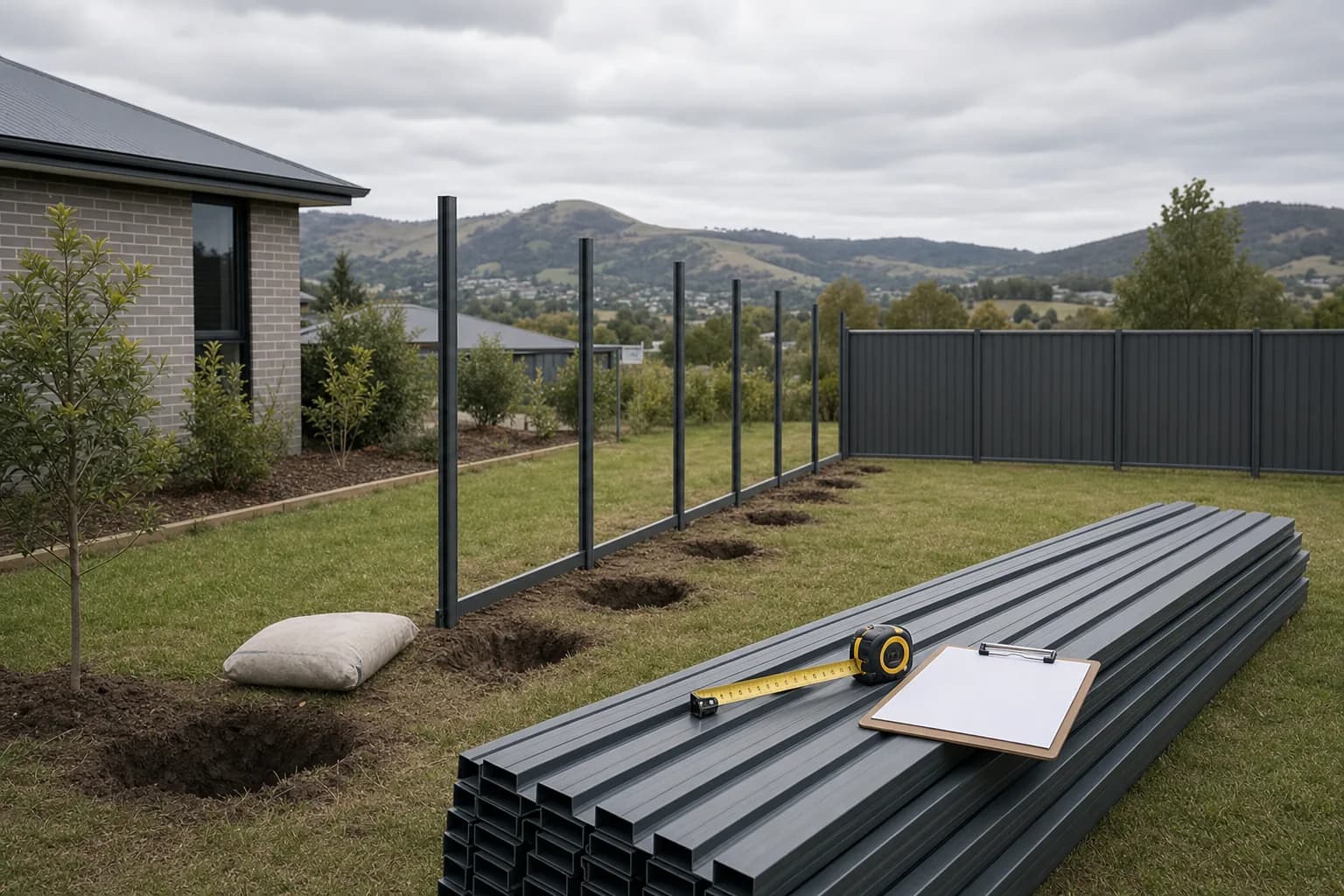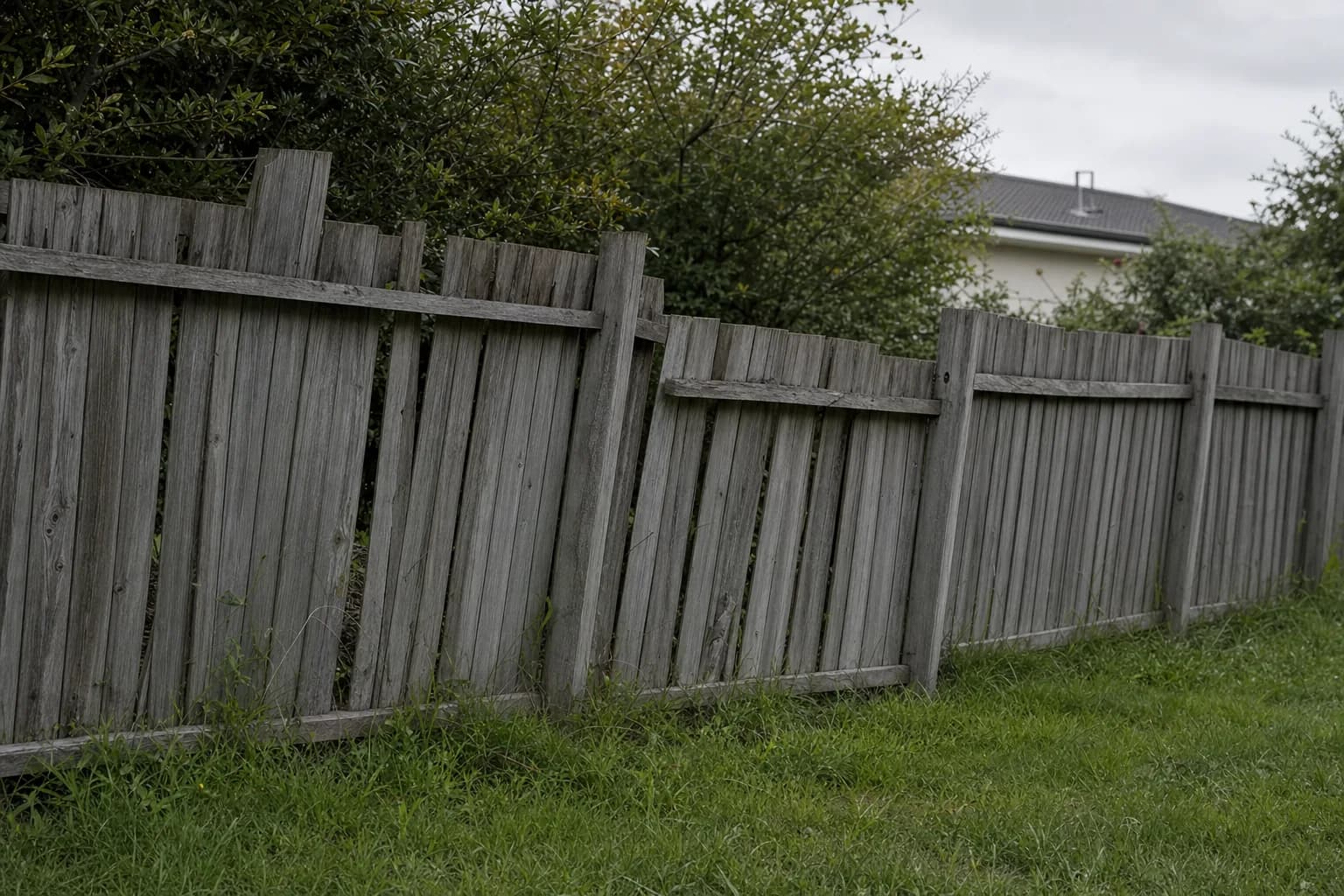
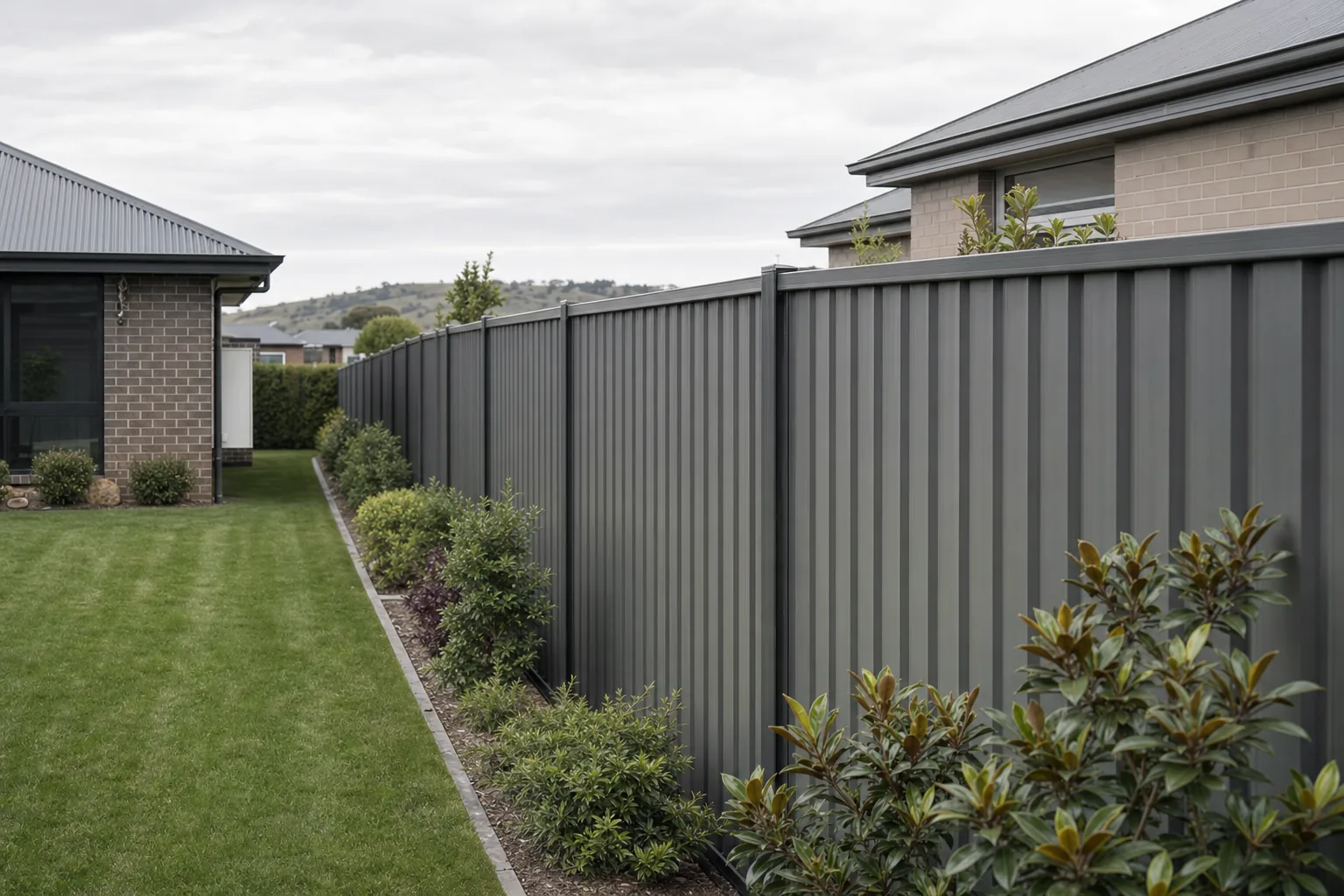
This is the question we get asked standing in front yards more than any other. You want the fence replaced, the neighbour has not raised it, and nobody wants to be the first one to bring up money with someone they have to live beside.
Here is what we can tell you plainly, and just as importantly, where we stop. We build fences and we sit in the middle of these conversations most weeks. We are not lawyers and we do not settle disputes.
The Short Answer, and Where It Ends
A fence on the boundary between two privately owned properties is generally a shared cost in Tasmania. The law that covers dividing fences is the Boundary Fences Act 1908, and it sets out how notice is given to a neighbour and how the cost is worked out between the two owners.
What we are deliberately not going to do is quote you notice periods, timeframes, percentages or form names. Those details matter and getting them slightly wrong is worse for you than us being vague. Read them at the source, or ask someone qualified, rather than trusting a fencing website.
What we are and what we are not
We build to the standards and we know this process from the yard side. We are not the regulator, we do not give legal advice, and anything genuinely contested belongs with your council or a solicitor.
Not Every Fence Is a Dividing Fence
The shared cost idea applies to a fence sitting on the boundary between two privately owned blocks. That is your standard back fence and side fences between two houses, which is most of what we replace across Launceston.
A fence on a boundary with a road is a different situation. There is no neighbour on the other side to share it with, so it is generally yours. Front boundaries are also the most likely to need a planning check, so treat them as their own conversation rather than lumping them in with the back fence.
The same goes for a fence set well inside your own land, an internal paddock fence on a rural block, or a pool barrier that happens to run near a boundary. Those are yours to pay for and yours to decide on.
- Between two homes: generally a shared dividing fence
- On a boundary with a road: generally yours, and the most likely to need a planning check
- Set inside your own boundary: yours alone, wherever you put it
- Internal fences on a rural block: yours alone
- A pool barrier: driven by the pool rules first, boundary questions second
How to Raise It Without Starting a Fight
Raise it before you book anything. The fastest way to turn a routine shared cost into a standoff is for the neighbour to find out about the fence when a crew turns up in the driveway. At that point they are not deciding on a fence, they are reacting to being told.
If you are on speaking terms, knock rather than letterbox. Say what you have noticed about the fence, ask whether they have noticed the same thing, and leave the money out of that first conversation completely. You are checking whether you agree there is a problem, nothing more.
- Raise it before you book a crew, never after
- Talk to the owner next door, not the tenant
- Leave the money out of the first conversation
- Bring an itemised written quote to the second one
- Put whatever you agree in writing, however friendly it was
Then get the practical part down in writing. Agreeing on the fence in writing is the usual first step under the Act in any case, and it protects both of you from a conversation that gets remembered two different ways six weeks later.
The one thing worth doing first
Agree on the fence, in writing, before anybody books a crew. Nearly every argument we get dragged into started as a friendly verbal agreement that the two owners later remembered differently.
Why an Itemised Quote Defuses the Conversation
A number you are carrying in your head is easy to argue with. An itemised written quote is much harder, because it shows the base run, the old fence removal, the gates and any extras as separate lines your neighbour can read for themselves and question line by line.
It also takes you out of the middle of it. You are not asking anyone to trust your estimate or your recollection of what a fencer said. You are handing over a document and asking whether they agree with the spec on it.
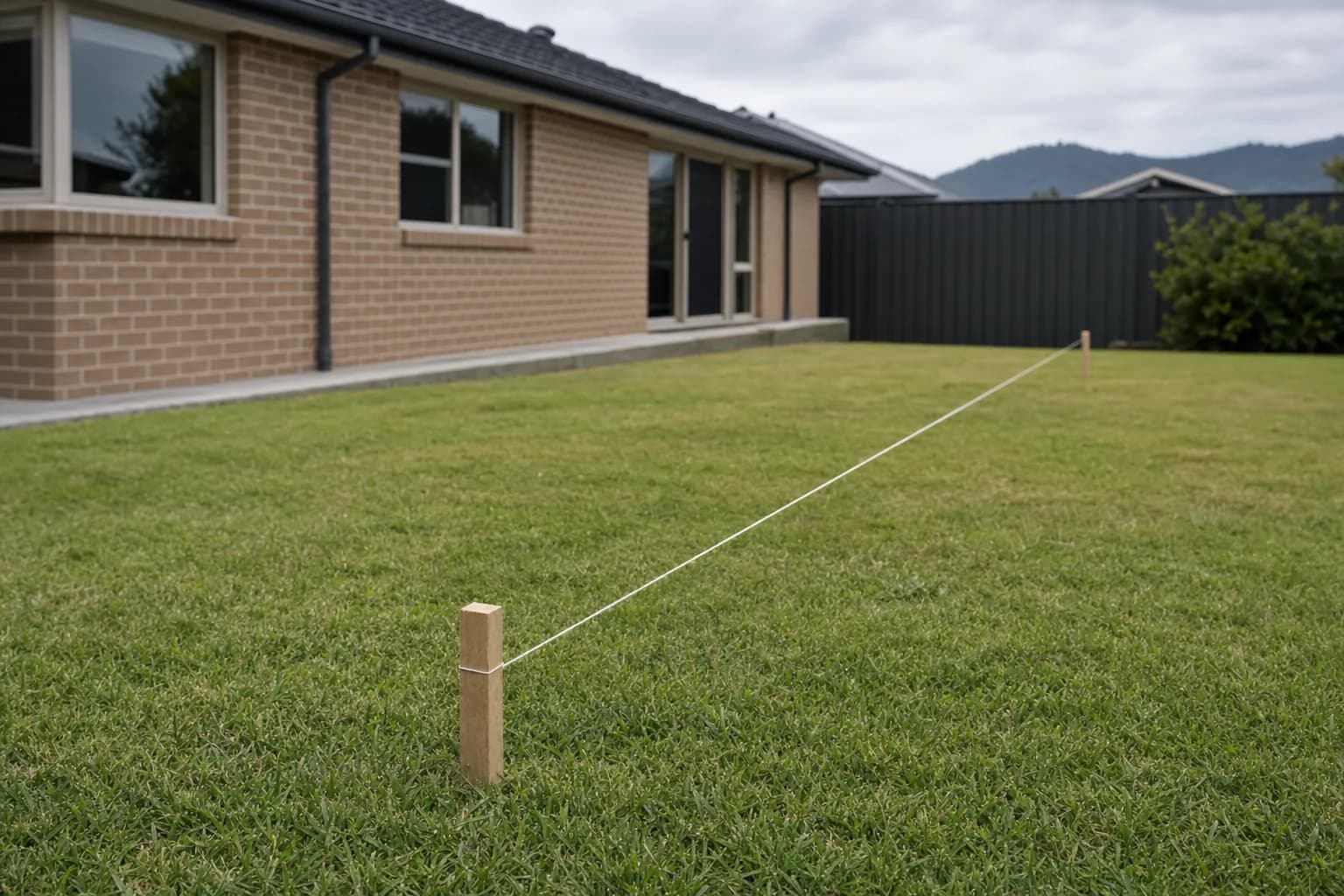
That is the reason we quote after walking the boundary rather than over the phone, and the reason every quote is itemised. Both owners can see exactly what they are agreeing to, and either of them can ask for a line to come off before anything is signed.
When One Owner Wants a Better Fence
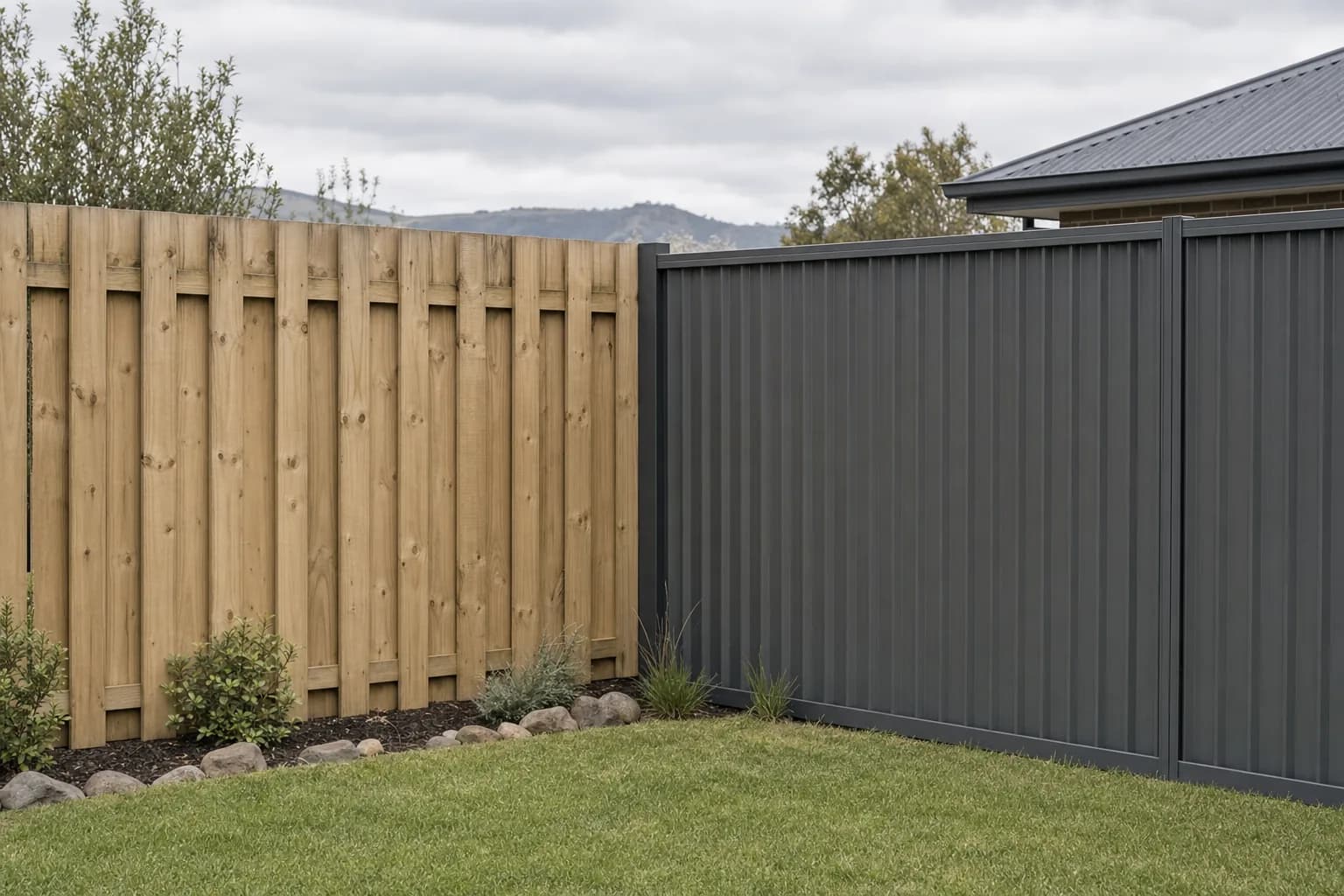
This is the usual sticking point, and it is rarely really about money. One owner is happy with a plain treated pine paling fence. The other wants Colorbond, aluminium slats, extra height or a colour upgrade, and suddenly a simple replacement has two different fences in play.
The general principle is that a shared cost is worked out against a standard dividing fence rather than against an upgrade. If you want something better than a standard boundary fence, expect to carry the difference yourself, and say so early.
That is a workable answer rather than a fight, and it is easy to put on paper. We can price the standard spec and the upgrade as separate lines, so the split is obvious and nobody feels they are quietly funding someone else's taste.
Ask for it priced both ways
If you want the better fence, have us quote the standard run and your upgrade separately. Your neighbour can then see exactly what they are being asked to contribute to, and what is yours alone.
Rental Properties: You Need the Owner
If the place next door is rented, the tenant is not the person who can agree to a fence. They might be perfectly happy about the whole idea and it still does not commit the person who actually pays for it.
You need the owner, and in practice that usually means going through the managing agent. That takes longer than a chat over the fence line, so start it earlier than you think you need to, especially if you were hoping to build before winter.
It works the other way too. If you are the landlord and your tenant mentions that the neighbour has been asking about the fence, that is your conversation to take over, not theirs to negotiate on your behalf.
Which Council Applies Depends on the Block
People assume Launceston rules cover everything we work on. They do not, because our patch spans more than one local government area and the answer to a planning question depends on which side of a boundary your block sits.
Blocks in Launceston, Newstead, Norwood, Kings Meadows, Mowbray and Newnham sit with the City of Launceston. Riverside and Legana fall under West Tamar Council, and Hadspen sits with Meander Valley Council. Confirm yours rather than assuming.
That distinction matters once a fence involves anything beyond a standard boundary run, like a front fence, a corner block or a heritage overlay. We will flag anything that looks like it needs checking, then you check it with the council that covers your address.
Where We Stop, Honestly
If your neighbour will not engage at all, or agrees and then disputes the cost afterwards, that part is outside what we can help with. We will not tell you what happens legally when someone refuses, because we do not know, and a confident wrong answer would cost you more than an honest blank.
What we can do is walk the boundary with you, or with both of you, and give you a real number in writing with every line visible. Most of the time that is the entire problem solved, because the argument was never about the fence.
For anything past that point, read the Boundary Fences Act 1908 and speak to your council or a solicitor. We build the fence to the standard. We do not adjudicate the boundary.
Want a real number for your block?
We walk the boundary, measure it properly, and send an itemised quote in writing within 48 hours.