Everyone asks for a price per metre. It is a fair question, and it is also the least useful number in fencing, because two fences of identical length on two blocks in the same street can come out a long way apart.
What follows is what we are actually looking at when we walk your boundary. None of it is a secret, and knowing it lets you read a quote properly rather than picking the smallest total.
Length Sets the Ballpark, Not the Price
Lineal metres drive the material count, so they give us the rough shape of a job. Longer runs usually work out cheaper per metre, because the set out, the delivery and the setup get spread further.
That is why a short front fence can look expensive per metre and still be a modest total. The fixed costs of turning up do not shrink just because the run is ten metres.
The Ground Is the Biggest Variable
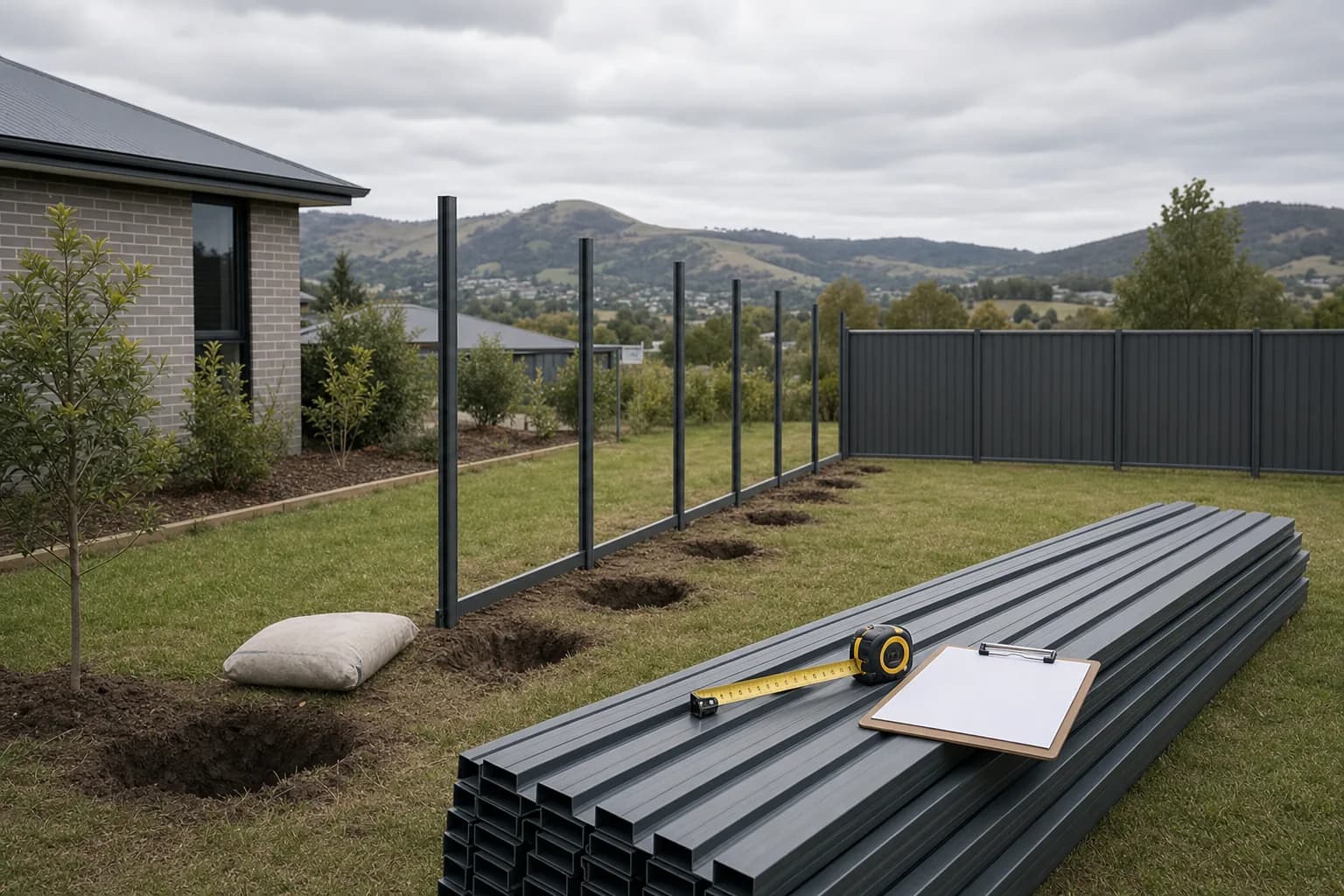
Post holes are where a fencing job speeds up or grinds to a halt. Straight digging in workable soil moves quickly, and a borer can do most of the work.
Rock changes everything. So does the heavy clay through parts of Launceston, which swells in a wet winter and shrinks back over summer, so footings have to be set for movement rather than to one standard depth.
Why this matters more than the fence itself
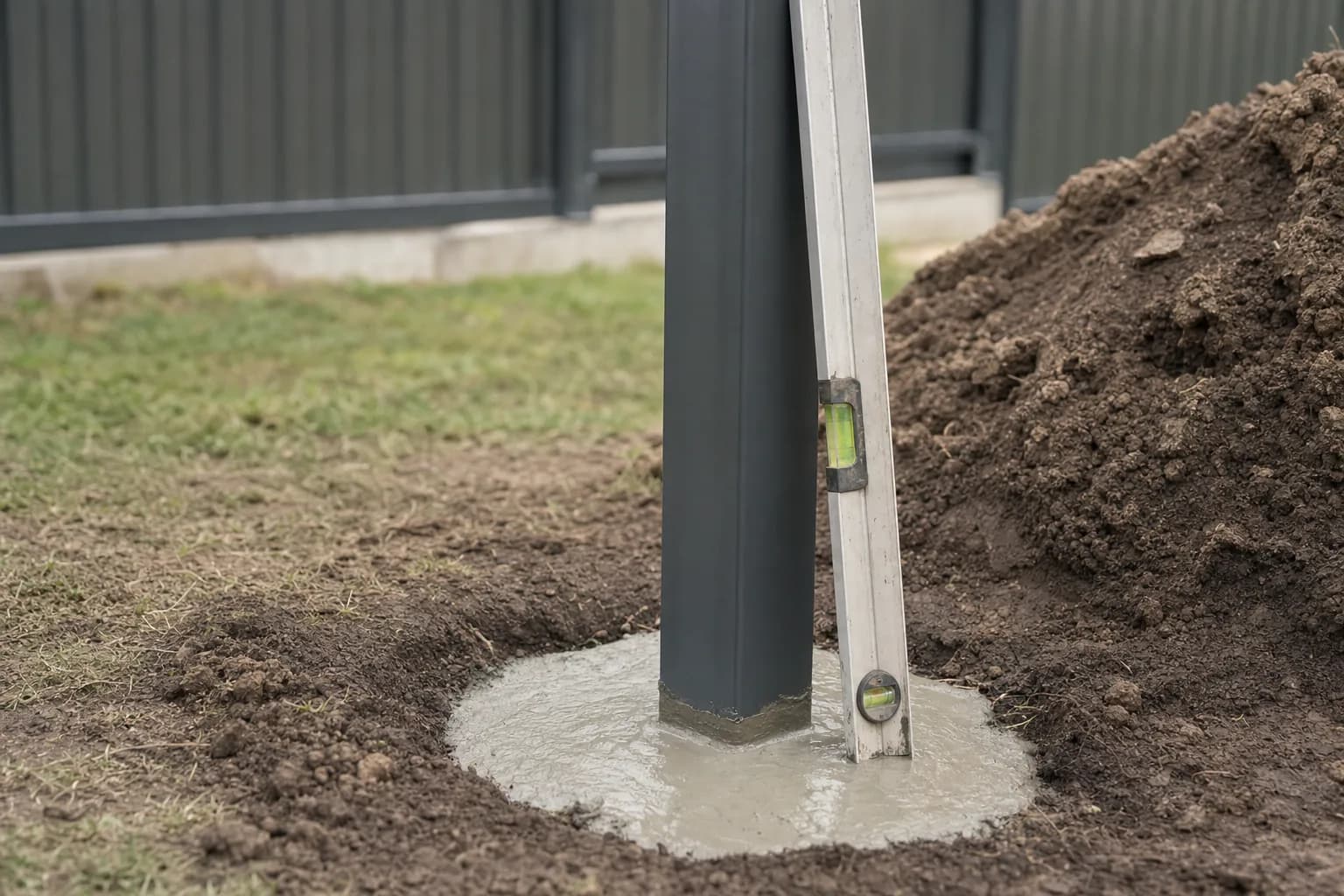
The parts that fail first are almost always underground. A post set too shallow, or backfilled with dirt instead of concrete, will lean within a few winters no matter how good the panels above it look.
Slope and Whether the Fence Steps or Rakes
Launceston is not a flat city. Once the ground falls away, a fence either steps down in sections or rakes to follow the slope, and both take longer to set out and cut than a straight level run.
A stepped fence also uses more posts and panels over the same distance than a flat one. That shows up in the quantities, not as a surcharge.
Old footings from a previous fence count here too. Breaking out a line of buried concrete before a single new post goes in is a morning of work that is invisible in the finished result.
Site Access, the Cost Nobody Expects
If we can get a ute and a post hole borer down the side of the house, the job moves. If we cannot, everything gets carried by hand and some holes get dug by hand.
Tight side access is common on the older post-war blocks around Launceston and it can add hours of labour to a job that looks simple on paper. It is one of the first things we check at the measure.
Established gardens do the same thing. Mature shrubs, raised beds and tree roots along the boundary all mean slower, more careful work than an empty lawn.
Height Costs More Than the Extra Height
Most backyard boundaries end up at 1.8m. Going taller means longer posts, deeper holes and often an extra rail, so the price per metre rises faster than the height does.
It is worth asking whether you need the height along the whole run or only across the section you actually want screened.
Material, and the Cost of Owning It
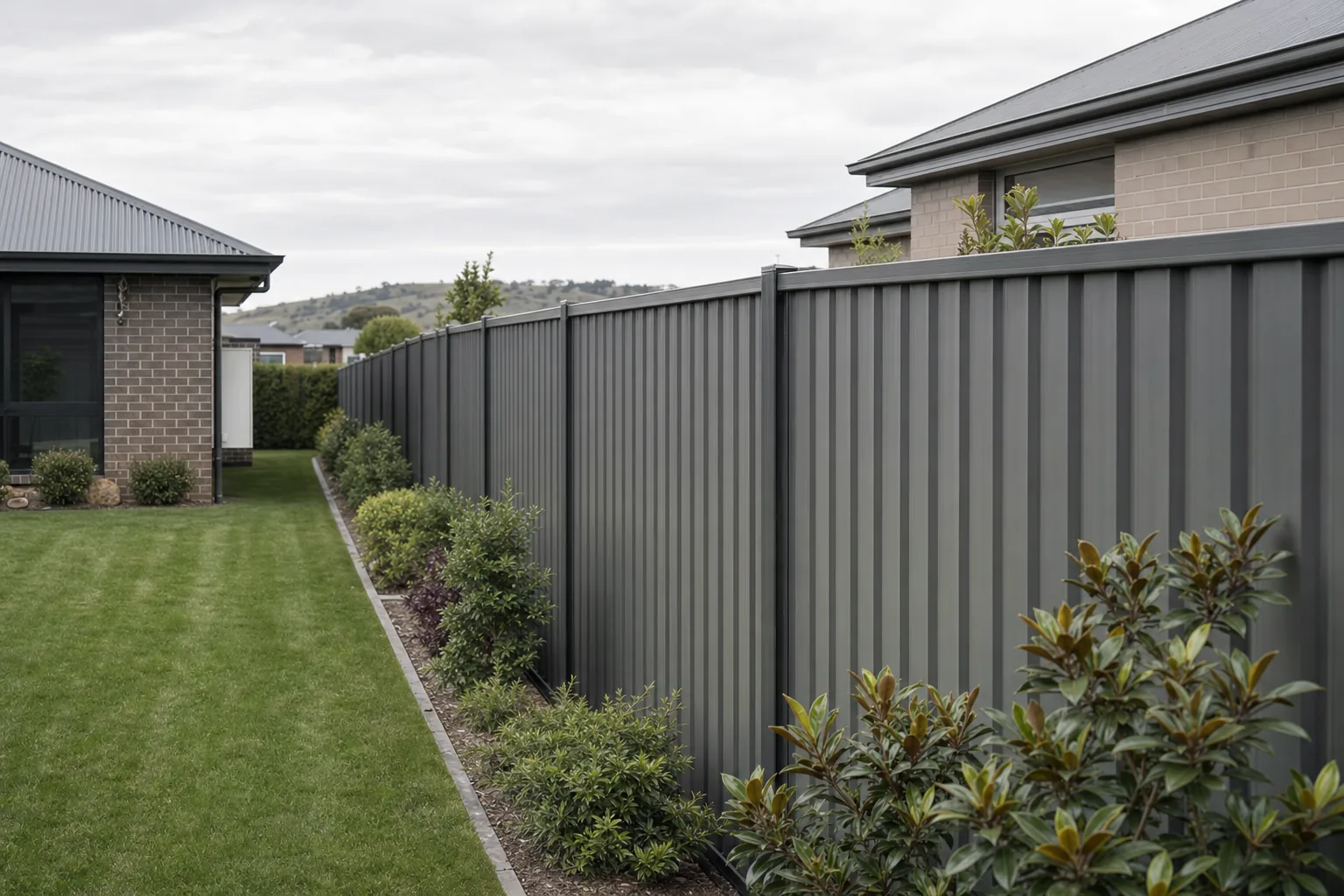
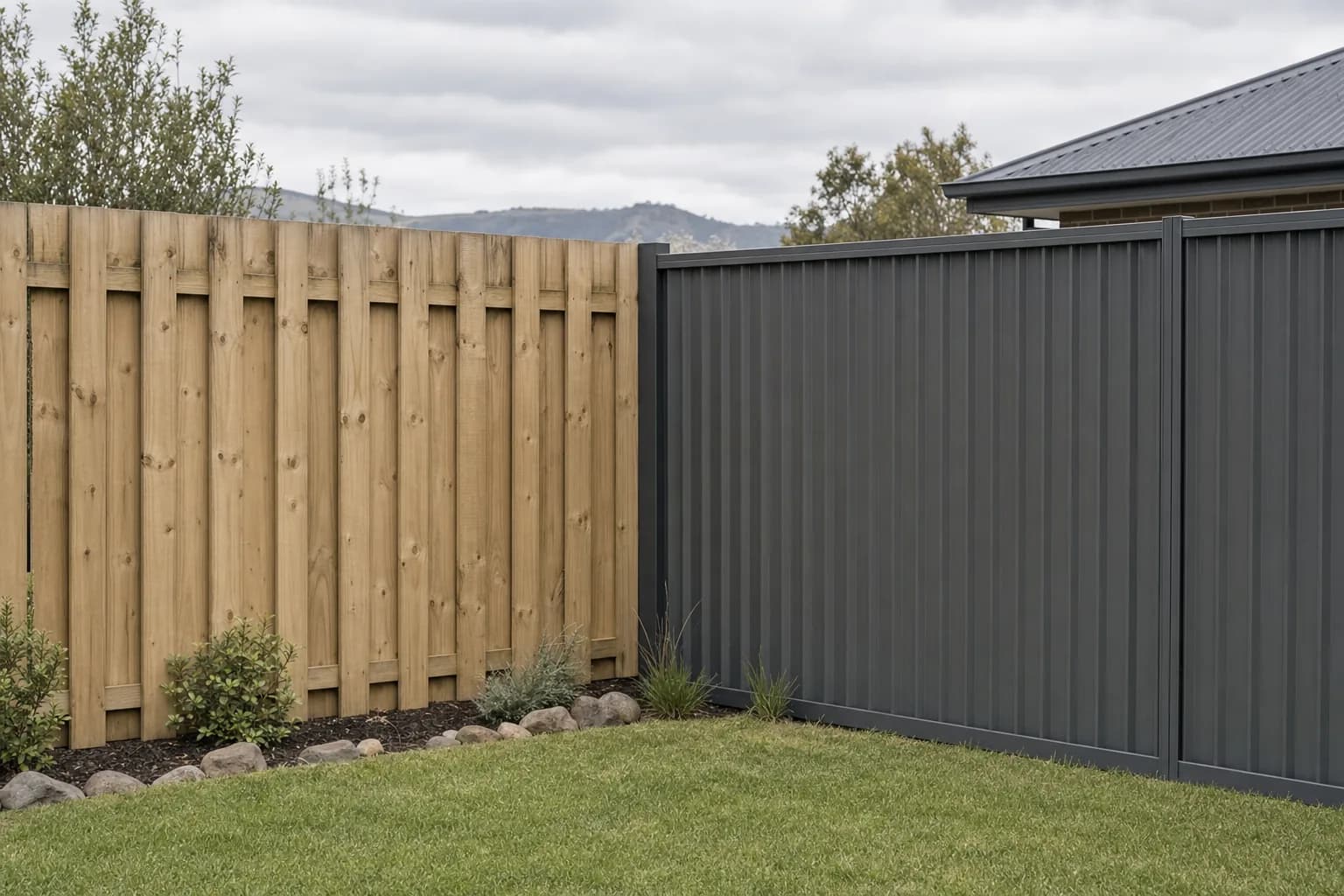
Steel and timber sit in a similar range to build, so the honest comparison is what each one asks of you afterwards. Colorbond is close to hose-it-down. Timber needs oil or stain every few years if you want to keep the colour.
- Treated pine is the value option for a timber boundary
- Hardwood costs more but holds a fixing better on exposed runs
- Colorbond gives full privacy with no ongoing upkeep
- Aluminium slat and frameless glass sit above both on price
- Picket is a front fence, priced by profile and spacing rather than by privacy
Colour is worth asking about too. On steel, some colours in the range sit at a different price point to the standard ones, which is easy to miss when you are choosing from a chart.
Gates Are Their Own Job
A gate is not a piece of fence with hinges on it. It carries a swinging load no other part of the run has to deal with, so the posts either side are heavier and set deeper than the ones down the boundary.
That is why gates are always itemised on their own. A double or vehicle gate is a bigger step again, and automation is a separate trade element on top of that.
On a sloping driveway the fall has to be designed around, because a swing gate that clears the ground at the hinge can foul it halfway through the arc. It is worth flagging at the measure rather than discovering later.
When You Will Actually Get It Built
Lead time is not a cost, but it is part of the decision. A crew that can start tomorrow is either between jobs or about to squeeze yours in, and neither is a good sign on a boundary you have to live with.
Ask when the job would start and how long it would take on site. Get both in writing with the quote, so a vague fortnight does not quietly become two months.
Removal, Gates and the Things Quoted Separately
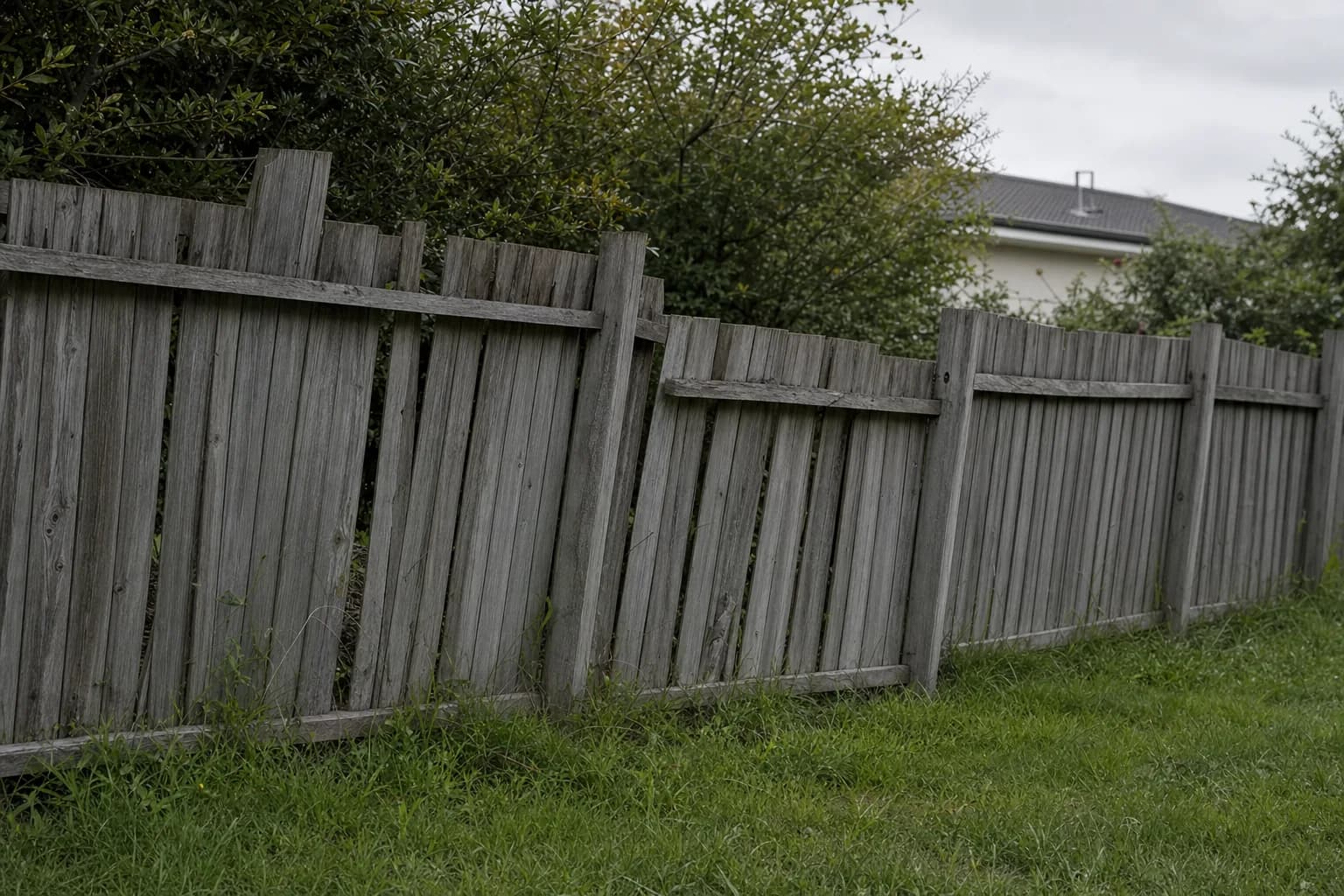
Pulling out the old fence, breaking out the concrete footings and taking the rubbish away is real work and it belongs on the quote as its own line. So do gates, capping rails and toppers.
This is where an itemised quote earns its keep. If two quotes differ by a few hundred dollars, it is usually because one of them has quietly left the removal out.
If It Is a Dividing Fence, You Are Probably Splitting It
A fence on the boundary between two homes is generally a shared cost in Tasmania under the Boundary Fences Act 1908. The usual first step is agreeing on the fence in writing.
That is the practical reason to insist on an itemised written quote. You can hand it straight to your neighbour instead of relaying a number from memory, and the conversation starts from a real figure.
What a Good Quote Actually Contains
Most fencing quotes are one number and a sentence. That is not enough to compare against anything, and it is not enough to hand to a neighbour who is being asked to pay half of it.
These are the lines worth insisting on, whoever you get to quote it:
- Lineal metres, height, and the material by name
- Post type and that footings are concreted, stated explicitly
- Removal and disposal of the old fence as its own line
- Each gate priced separately, with its hardware
- Any capping rail, topper or infill panel listed on its own
- How long the price stays valid for
- When the job would start and roughly how long it takes
What to ask any fencer for
A written, itemised quote after an on-site measure. If a price arrives over the phone without anyone looking at your ground, it is a guess, and a wrong guess gets corrected mid-job at your expense.
Want a real number for your block?
We walk the boundary, measure it properly, and send an itemised quote in writing within 48 hours.